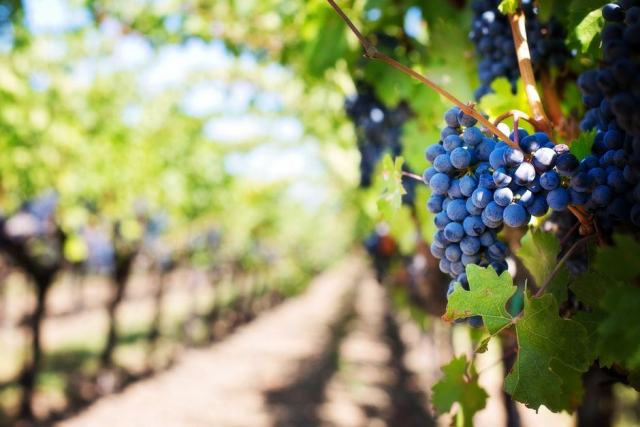
Organic champagne is champagne made from grapes grown without synthetic pesticides, herbicides or chemical fertilisers, on vineyards certified under European Union organic farming rules, and sold in France as champagne bio. In Champagne, where the climate is cool and damp, that choice is harder than in most wine regions, which is why the growers who take it on are worth knowing by name.
- Organic: certified farming, three years of conversion, EU leaf logo on the label.
- Biodynamic: organic plus a farm-wide method, certified by Demeter or Biodyvin.
- Who leads: mostly grower producers, with a few large houses converting estates; around seven per cent of Champagne's production is certified organic or in conversion.
Contents
- What is organic champagne, legally speaking?
- How is organic champagne produced in the vineyard?
- Organic, biodynamic or sustainable: three labels compared
- The growers leading organic and biodynamic champagne
- Does organic champagne taste different?
- Organic champagne questions worth answering before you buy
What is organic champagne, legally speaking?
A bottle can only say "organic" (or carry the French mention agriculture biologique, often shortened to "champagne bio") if the grapes come from vineyards certified by an approved body and the wine is made under the EU organic wine rules. Those rules have covered vinification, not only farming, since the 2012 harvest, when the European Commission announced that its new regulation would apply from that crop onwards. Before that, a producer could only write "made from organically grown grapes". The same announcement set two label checks that still help a buyer today: the EU organic logo and the code number of the certification body must both appear on the bottle. If the code is missing, the word "organic" on a shop shelf tag is not enough.
The vineyard first goes through a conversion period of three years. During that time the grower already farms organically but cannot sell the wine as organic. In Champagne, where a non-vintage cuvee often rests two to three years in the cellar before release, the first certified bottles therefore appear five or six years after the decision to convert.
In the cellar, organic champagne follows the same champenoise method as any other bottle: still base wine, a second fermentation in the bottle, ageing on the lees, riddling and disgorgement. The differences sit in the detail. Permitted additives are fewer: sorbic acid and desulphurisation are not allowed. Maximum sulphite levels are lower too; when the rules were adopted, the Commission set them at least 30 to 50 mg per litre below the conventional equivalent, depending on residual sugar. The sugar used for the liqueur de tirage and the dosage must itself be organic. If you want to know how much sugar ends up in your glass, our guide to champagne dosage and the sweetness scale explains each level from brut nature to doux.
How is organic champagne produced in the vineyard?
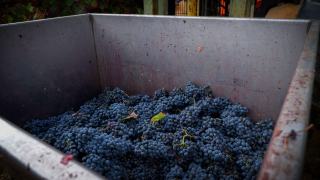
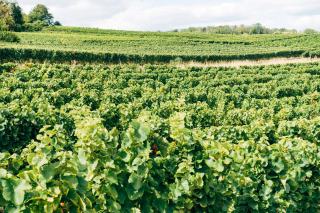
The work starts in the vines, and that is where organic viticulture in Champagne gets difficult. The region sits near the northern limit of grape growing. Spring frost, wet summers and mildew pressure are common, and synthetic fungicides were for decades the standard answer. Organic farming replaces them with copper and sulphur, applied more often and with a tighter eye on the weather.
Weeds are handled by ploughing or by cover crops sown between the rows rather than by herbicides. Fertility comes from compost, not mineral fertiliser. Yields are usually lower, and a bad season can cost a large share of the crop. That is the real price of the label: more hours of labour per hectare, more passes with the tractor or the horse, and more risk.
The three main grape varieties are farmed the same way. Chardonnay, pinot noir and pinot meunier all appear in organic cuvees, along with rarer varieties such as pinot blanc and arbane that some growers have kept or replanted. An organic blanc de blancs champagne is pure chardonnay; an organic blanc de noirs champagne is made from the black grapes, and our page on full-bodied blanc de noirs from pinot noir and meunier covers that style in depth.
Organic, biodynamic or sustainable: three labels compared
Three certifications appear on champagne labels and in shop descriptions, and they do not promise the same thing. The table sets them side by side.
| Certification | Synthetic pesticides | Who certifies | What it adds |
|---|---|---|---|
| Organic (EU leaf, AB) | Banned | Approved control bodies under EU law | Rules for both farming and winemaking |
| Biodynamic (Demeter, Biodyvin) | Banned | Private associations, on top of organic certification | Herbal and mineral preparations, farm treated as a whole, stricter cellar limits |
| Sustainable (VDC, HVE) | Reduced, not banned | Comité Champagne scheme and French ministry label | Biodiversity, water and energy targets across the estate |
Biodynamics goes further than organic farming. It treats the vineyard as a living farm, uses preparations made from plants, cow manure and silica, and often follows a planting and working calendar tied to the moon. Whether those practices change the wine is debated; what is certain is that a biodynamic estate must already meet the organic rules to be certified.
The sustainable labels are useful but different. "Viticulture Durable en Champagne" and the French HVE label reward lower chemical use and better environmental management, yet a grower holding them may still spray synthetic products. If organic is what you want, look for the EU leaf.
The growers leading organic and biodynamic champagne
The movement in Champagne was built by small family estates long before the big names took notice. Most of them are récoltants-manipulants, growers who make wine only from their own vines, a category explained in our page on why grower champagne tastes of one village.
- Georges Laval in Cumières has farmed organically since the early 1970s, one of the first in the region. The cuvees are small in volume, often brut nature, and much sought after.
- Champagne Fleury in the Côte des Bar converted to biodynamics in 1989 and is usually cited as the pioneer of the method in Champagne.
- Larmandier-Bernier in Vertus works chardonnay from premier cru and grand cru villages of the Côte des Blancs under biodynamic farming, with low or zero dosage.
- Champagne Leclerc Briant in Épernay is a house rather than a grower, but it has built its identity around biodynamic farming and an extra brut style.
- Vouette et Sorbée, Françoise Bedel and David Léclapart complete a list of names that wine merchants and sommeliers follow closely.
Several large houses have moved too. Louis Roederer farms a large part of its own vineyard organically and biodynamically, owns the largest organically certified vineyard in Champagne at 135 hectares, and has released organic brut nature cuvees. Champagne Lanson sells a certified organic blend under its Green label. Duval Leroy was among the early houses to release an organic cuvee, and Telmont aims to make its whole production, around 400,000 bottles a year, organic by 2031. Dom Perignon and most other prestige brands remain outside certification, even when parts of their vineyards are farmed with fewer treatments.
Does organic champagne taste different?
There is no organic taste as such. A brut nature blanc from a biodynamic grower in the Aube and a rose champagne from a large organic house share a farming philosophy, not a flavour. What many tasters notice is a style that often comes with it: low or zero dosage, a strong sense of one village or one plot, and wines that are less polished but more distinctive than a large house blend.
Where the vines grow shapes the wine as well: two certified growers in different parts of the appellation will not make the same champagne, which is why it helps to know which champagne regions shape the style in your glass before comparing organic bottles. The EU organic rules are not specific to Champagne either: they cover every European wine sold as organic, including other traditional method sparkling wines, whose differences from champagne are set out in sparkling wine vs champagne, from grape to glass.
That style is a choice of the vigneron, not a consequence of the certification. Read the tasting notes and the dosage on the back label rather than relying on the leaf logo alone to predict what is in the bottle.
Organic champagne questions worth answering before you buy
What are the benefits of organic champagne?
The main benefit is environmental: no synthetic pesticides or herbicides in the vineyard, more biodiversity in the soil and between the rows. Sulphite limits are also lower than for conventional champagne. Organic champagne is not a health product, and it contains the same alcohol as any other.
Where to buy organic champagne?
Specialist wine shops and online merchants that list growers usually have the widest choice, often with a dedicated organic section. Some estates sell direct from the cellar door in the Champagne region. Large supermarkets mostly stock organic cuvees from big houses rather than small producers.
What is the price range for organic champagne?
Prices follow the producer more than the certification. Organic cuvees from large houses sit close to their conventional brut, while rare grower bottles and prestige cuvees cost more because volumes are tiny. Lower yields and extra labour push prices up slightly on average.
How can I check that an organic champagne is really certified?
Look for two things on the label: the EU organic leaf and, next to it, the code number of the certification body. Both are required for wine sold as organic under the EU rules in force since the 2012 harvest. A shop description or a green-looking label without that code does not prove certification; the producer can also show you its certificate on request.
Is all grower champagne organic?
No. Many growers farm carefully without seeking certification, and some use reduced treatments under the sustainable labels. Only the EU organic logo, or Demeter and Biodyvin for biodynamics, guarantees certified farming.