Every bottle of Champagne ferments twice, and the second fermentation happens inside the very bottle you open. That is the heart of the méthode champenoise, the traditional champagne method of sparkling wine production: a still base wine receives the liqueur de tirage, a mixture of sugar and yeast, is sealed with a crown cap and slowly makes its own bubbles, gaining the complexity of long aging on the lees before riddling, disgorgement and dosage.
- Where the bubbles come from
- A secondary fermentation in the bottle, triggered by the liqueur de tirage.
- What gives the taste
- Months or years of contact with dead yeast cells, the lees.
- Who may use the name
- Only wines produced in the Champagne region of France; elsewhere the label says traditional method.
What is the méthode champenoise, in one paragraph?
The méthode champenoise is a way of producing sparkling wine in which the bubbles are created by a second fermentation that takes place in the same bottle the wine is sold in. The winemaker first makes a still base wine, then adds a small dose of sugar and yeast, closes the bottle and lets the yeast convert that sugar into alcohol and carbon dioxide, the fizz you see in the glass. Because the gas cannot escape, it dissolves into the wine. The yeast then dies and settles as a fine deposit, and the wine rests on it for a long time before the sediment is removed. The term champagne method is legally protected: since the 1990s, European Union rules have reserved the words méthode champenoise for Champagne itself, so producers in other regions describe the same technique as méthode traditionnelle, metodo classico or traditional method. The process is slow and costly, which is why it is mostly used for quality sparkling wines rather than cheap ones. To see how this compares with the other ways of making bubbles, read about the difference between Champagne and other sparkling wine.
Harvest and pressing: why the juice must stay clear
The work begins at harvest, usually in September. In Champagne the grapes are picked by hand, because whole, unbroken bunches are needed for the press. The three main grape varieties are Chardonnay, Pinot Noir and Pinot Meunier, and two of them have dark skins. A white wine made from dark-skinned fruit is only possible if the juice leaves the skins quickly, before it can take colour.
Pressing is therefore gentle and split into fractions. The appellation rules allow 2,550 litres of juice from a pressing of 4,000 kilograms of fruit. The first 2,050 litres, called the cuvée, are the purest and most delicate; the next 500 litres, the taille, are richer in colour and fruit and are used in smaller proportion. Anything pressed beyond that level is not allowed into Champagne. Each lot of juice is kept apart, by village and by grape variety, so that the cellar master has as many building blocks as possible for the blend. The juice then settles for several hours, a step called débourbage, so that solid particles fall to the bottom before fermentation starts. You can learn more about each variety in our guide to the grapes behind every champagne blend.
Primary fermentation and the base wine
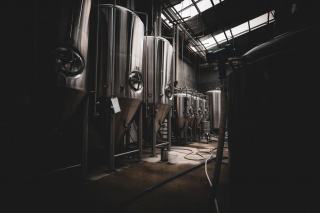
The clear juice goes through a primary fermentation, most often in temperature-controlled stainless steel tanks, sometimes in oak barrels or large casks when a producer wants a rounder, more oxidative style. Yeast ferments the natural grape sugar and produces a still, crisp and quite acidic wine of around 10 to 11 per cent alcohol. The quality of this first winemaking step decides much of what follows. Most producers also let the wine go through malolactic conversion, which softens sharp malic acid into gentler lactic acid, although some cellars block it to keep a crisper, more tense profile.
At this stage the base wine is not pleasant to drink on its own. It is thin and tart, and that is exactly what is wanted: the sugar added later and the long ageing will bring body, while the high acidity keeps the finished wine fresh for years. A base wine that tastes ripe and round in winter often produces a heavy, flat Champagne.
Blending, the assemblage that defines a house
In the months after the harvest, the cellar master tastes dozens, sometimes hundreds, of base wines and decides how to blend them. This assemblage is where a champagne house imposes its signature. A non-vintage blend mixes wines from several villages, several grape varieties and, above all, reserve wines kept from previous years. Those older wines smooth out the differences between a cool year and a warm one, so that a bottle of the same brut cuvée tastes the same from one release to the next.
A vintage wine, on the other hand, uses only the harvest of one year and is made only when the year is judged good enough. A blanc de blancs is made from Chardonnay alone, a blanc de noirs from Pinot Noir and Meunier alone. Blending is often described as the most intellectual step of the whole method, because the blender must imagine what the wine will taste like after several years in the cellar, not what it tastes like today. Large producers such as Moët & Chandon keep enormous libraries of reserve wines precisely for this reason, and a specific house style can rely on wines that are ten years old or more.
Tirage and the secondary fermentation in the bottle
Once the blend is set, the wine is bottled with the liqueur de tirage, a mixture of wine, cane or beet sugar, selected yeast and a clarifying agent that will help the sediment slide later. A typical addition is about 24 grams of sugar per litre, which is enough to create roughly six bars of pressure, around three times the pressure in a car tyre. The bottle is closed with a crown cap, the same kind of metal cap used on beer, fitted with a small plastic cup inside called a bidule.
The bottles are then laid down in cool, dark cellars, often chalk galleries dug deep beneath towns such as Reims and Épernay. There the secondary fermentation begins, a stage the French call the prise de mousse, literally the taking of the foam. It lasts a few weeks. The yeast consumes the added sugar, adds a little over one degree of strength and releases carbon dioxide, which has nowhere to go and dissolves into the liquid. This fermentation in the bottle is what separates the traditional method from methods that make bubbles in a tank.
Ageing on the lees: where the complexity comes from
When the sugar is used up, the yeast dies and forms a deposit along the side of the bottle. These dead yeast cells, the lees, slowly break down in a process called autolysis, releasing compounds that give Champagne its aromas of brioche, toasted bread, almond and cream, and a finer, more persistent mousse. The longer the wine rests on its lees, the more pronounced these aromas become, and the smaller each bubble feels on the palate.
The rules set a minimum time. A non-vintage Champagne may not leave the cellar until at least 15 months after tirage, of which at least 12 must be spent on the lees. A vintage Champagne must wait at least three years. Many producers go far beyond these minimums: two to three years for a standard non-vintage cuvée is common, and prestige wines can stay on the lees for a decade. This slow ageing ties up stock and cellar space for years, which is a major reason the method is expensive. Our page on vintage champagne and the years worth drinking explains how long ageing changes the wine in the glass.
Riddling: moving the sediment into the neck
After ageing, the deposit has to be brought down into the neck of the bottle so it can be removed. This step is riddling, remuage in French. Traditionally the bottles are placed neck first in a pupitre, a wooden A-frame rack with angled holes. Over several weeks a riddler gives each bottle a short twist and a slight tilt, a little more upright each time, until the bottle stands almost vertically, upside down, with all the sediment resting on the crown cap.
The pupitre is usually credited to Veuve Clicquot at the start of the 19th century, and it turned cloudy sparkling wine into the clear drink we know. A skilled riddler can turn tens of thousands of bottles a day. Today most cellars use gyropalettes, metal cages that hold around five hundred bottles and reproduce the same movements automatically, day and night. Riddling that took six to eight weeks in a pupitre now takes about a week. Manual riddling survives mainly for large formats and some prestige cuvées.
Disgorgement and the liqueur d'expédition
Disgorgement removes the sediment. In the modern process, called disgorging à la glace, the neck of the upside-down bottle is dipped in a freezing brine at around minus 27 degrees, so that the sediment is trapped in a small plug of ice. The bottle is turned upright, the crown cap is removed, and the pressure inside pushes the frozen plug out. Before the ice technique, disgorgement was done à la volée, and an additional amount of wine was lost with each bottle.
A small volume of liquid is lost, and it is replaced with the liqueur d'expédition, also called the liqueur de dosage: wine, usually with some sugar. The quantity of sugar added at this point decides the sweetness level printed on the label. Some wines receive no sugar at all and are sold as brut nature. The bottle is then closed with its final cork and wire cage and left to rest for a few months so the added sugar can integrate before shipping. The date of disgorgement matters to wine lovers, because the same wine tastes fresher just after disgorging and more mature a few years later. The table below lists the legal labels.
| Label | Sugar added | How it tastes |
|---|---|---|
| Brut nature | under 3 g per litre, none added | no sweetness at all, very pure |
| Extra brut | 0 to 6 g per litre | barely any sweetness, taut |
| Brut | under 12 g per litre | crisp, the most common style |
| Extra dry | 12 to 17 g per litre | a touch of sweetness, softer |
| Sec | 17 to 32 g per litre | noticeably sweet |
| Demi-sec | 32 to 50 g per litre | sweet, for desserts |
| Doux | over 50 g per litre | very sweet, rare today |
For a closer look at how sugar shapes balance, see how the final sugar addition changes your bottle.
A short history: Dom Pérignon, Merret and the widow
Popular legend credits the monk Dom Pérignon with inventing Champagne, but he actually spent much of his career trying to prevent bubbles, which burst bottles in the cellars of his abbey at Hautvillers. His real legacy is in pressing and blending. The first written description of deliberately adding sugar to wine to make it sparkle came from England: in 1662 the scientist Christopher Merret presented a paper to the Royal Society describing the practice, and English glassmakers were producing bottles strong enough to hold the pressure.
The method took its modern shape in the 19th century. Riddling made clear sparkling wine possible, the chemist Jean-Antoine Chaptal helped explain the role of sugar, and pharmacist André François measured how much sugar a wine needed to avoid exploding bottles. Firms in Reims and Épernay grew into international brands on the back of these improvements.
The traditional method outside Champagne
Because the name is protected, sparkling wines made the same way elsewhere use other terms. In France, the eight crémant appellations, from Alsace to Burgundy and the Loire, all follow the traditional method. Spain produces Cava, Italy produces Franciacorta and Trento under the name metodo classico, and South Africa calls its bottle-fermented wines Cap Classique. England now makes very good traditional-method sparkling wine from the same three grape varieties. Blanquette de Limoux, in the south of France, claims one of the oldest sparkling wine traditions, and part of its production still uses the ancestral method, in which a single fermentation is stopped and finishes in the bottle without any tirage.
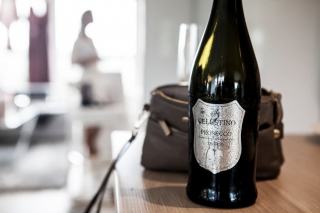
Other methods are cheaper. The tank method, also called the Charmat method, runs the second fermentation in a large pressurised tank and bottles the wine afterwards: this is how most Prosecco is made, and it keeps fresh fruit rather than creating the toasty character of long lees aging. The transfer method ferments in the bottle, then empties the bottles into a tank to filter the wine before bottling it again, which saves the riddling and disgorgement steps. Neither can use the words traditional method.
Questions people ask about the champagne method
Is méthode champenoise the same as traditional method?
Technically, yes. The steps are identical; only the name differs. Méthode champenoise may appear only on wines from the Champagne region, while producers elsewhere must write méthode traditionnelle, metodo classico or traditional method on the label.
How long does the champenoise method take?
At least 15 months from tirage to release for a non-vintage Champagne and three years for a vintage, but most producers take two to three years, and prestige cuvées often much longer.
Why is Champagne more expensive than Prosecco?
Prosecco is usually made by the tank method in a few weeks, while Champagne ferments in each bottle, ages for years on its lees and is riddled and disgorged bottle by bottle, with hand-picked fruit and strict pressing limits.
What is added to Champagne after disgorging?
The liqueur d'expédition, a blend of wine and usually sugar, which tops up the bottle and sets the sweetness level, from brut nature to doux.