Champagne dosage is the small measure of sugar, dissolved in wine, that is added to each bottle after disgorgement. That liqueur de dosage sets the grams of sugar per litre, shown as a category on the champagne label from brut nature to demi-sec and doux, and it shapes the character of the finished wine.
- What it is
- A small liqueur of wine added just before the final cork, sometimes called the liqueur d'expédition.
- What it measures
- Grams per litre, which place the champagne in one of seven legal categories.
- Why it matters
- It balances the high acidity of champagne and changes the food it suits.
What is champagne dosage, exactly?
Dosage is the final touch in the traditional method. After the second fermentation in bottle and months or years of ageing on the lees, riddling slowly turns and tilts each bottle until the yeast deposit is collected in the neck and expelled: this is disgorgement. A little wine is lost in the process, and the gap is topped up with the liqueur de dosage before the cork and wire cage go on. The whole sequence is described step by step in how champagne is made by the méthode champenoise.
The liqueur itself is simple on paper: cane sugar (or, at some houses, rectified grape must) dissolved in wine. In practice each champagne house guards its recipe. Some use the same base wine as the cuvée, others a reserve wine aged in oak or in large tanks, a few keep a liqueur for years before using it. Because only a few millilitres are used, the choice of wine in the liqueur is as much about aroma as about balance.
This addition should not be confused with residual sugar left over from fermentation. The second fermentation consumes almost all that was added at bottling (the liqueur de tirage), so a champagne leaves the lees with almost none left. What you taste as sweetness in the glass is, for the most part, that final liqueur.
Why winemakers add a liqueur at all
Champagne grows in a cool northern region, and its base wines are high in acidity. Chardonnay, Pinot Noir and Pinot Meunier picked in the Marne or the Aube rarely reach the ripeness of grapes grown further south. A touch of sugar softens that acidity, rounds out the texture and can bring out fruit and brioche notes developed during ageing. It also reacts with the wine over time: a dosed champagne kept in a cellar develops toasty, honeyed tones faster than an undosed one.
The role of dosage is therefore balance, not richness for its own sake. A winemaker usually tastes several trial versions of the same wine, each with a different amount, before deciding. Two bottles with the same label category can come across very differently, because a ripe vintage needs less than a lean year to feel harmonious.
How much sugar in champagne? The seven dosage levels
European rules define the categories by grams per litre in the finished wine. Every champagne label must carry one of these mentions, which makes the scale the fastest way to guess the character of a champagne before opening it.
| Label term | Sugar per litre | How it tastes |
|---|---|---|
| Brut nature (non dosé) | under 3 g, no sugar added | sharp, saline, nothing to hide behind |
| Extra brut | 0 to 6 g | austere, mineral |
| Brut | under 12 g | crisp with rounded fruit |
| Extra dry | 12 to 17 g | off-dry, softer |
| Sec | 17 to 32 g | noticeably sweet |
| Demi-sec | 32 to 50 g | sweet, a dessert wine |
| Doux | over 50 g | rich and sweet, now rare |
The names are a trap for newcomers. Extra dry is sweeter than brut, and sec, which means dry in French, is clearly sweet. These names are older than modern tastes: when they were fixed, most champagne was sweet, and a sec counted as restrained only by comparison. The regulation also allows a small tolerance around each limit, so neighbouring categories can sit very close to each other. The same wording appears on other sparkling wine made by the traditional method, such as crémant, so the scale is worth learning once.
Champagne with no added sugar at all
Brut nature, also sold as zero dosage or pas dosé, receives no sugar at all after disgorgement; the bottle is topped up with wine only. With nothing to soften it, the champagne shows its base wine exactly as it is. A ripe, well-aged blend can be thrilling in this style, while a thin or young wine turns hard and austere.
Lightly dosed champagne is not new. Perrier-Jouët is often credited with shipping an unsweetened champagne to London in the mid-19th century, and Laurent-Perrier launched its Ultra Brut in 1981, long before it became fashionable. Since the 2000s, grower producers focused on terroir, such as Jacques Selosse and Larmandier-Bernier, have pushed the dose down further, arguing that it masks the voice of the vineyard. Large houses followed: many now offer a leaner cuvée next to their flagship blend.
How to read the dosage on a champagne label
The category (demi-sec, sec and so on) is compulsory and usually sits near the name of the cuvée, sometimes in small print on the back label. Many producers now go further and print the exact figure, for example "dosage 4 g/l", along with the disgorgement date. That date matters as much as the grams: a bottle disgorged recently seems fresher, one disgorged years ago has let the liqueur integrate and the wine take on toasty notes.
The label also tells you who made the wine through codes such as NM (négociant manipulant) or RM (récoltant manipulant); our page on champagne labels decoded, from NM to RM explains each abbreviation. Put together, the category, the figure in grams and the producer type give a fairly precise picture of the wine before you pull the cork.
Is the trend towards lower dosage good for the wine?
Over the past twenty years the average sugar content of champagne has fallen noticeably. Warmer vintages play a part: grapes now reach higher ripeness than in the 1980s, so the wine needs a lighter dose to feel balanced. Consumer taste for drier wine and the visibility of grower champagne have done the rest. Many bottles in the most common category today sit closer to 6 g than to the 12 g ceiling.
Lower is not automatically better. A carefully judged dosage of 7 or 8 g can make a champagne more complete than an unsweetened version of the same blend. A blanc de blancs from grand cru Chardonnay villages often handles a very low dose well, while a rosé or a blanc de noirs built on Pinot Noir may need a little more. Producers who work with a generous share of reserve wine often find the rounder profile easier to balance without sugar. Our article on reserve wines and house style shows how blending changes what a champagne needs. The honest answer is that dosage should fit the wine, and tasting is the only reliable test.
Matching dosage with food
Sugar content guides pairing more than any other factor. The leanest wines suit raw and briny dishes: oysters, sea urchin, sashimi, a sharp aged cheese. Brut, the most versatile champagne, goes from aperitif to poultry and fish in butter sauce; the brut champagne style is the default choice at a table where dishes vary. Extra dry and sec work with spicy food and with foie gras, whose richness calls for a softer wine. Demi-sec and doux belong with fruit desserts, tarte Tatin or blue cheese, where a crisper wine would seem thin and sour next to the dish.
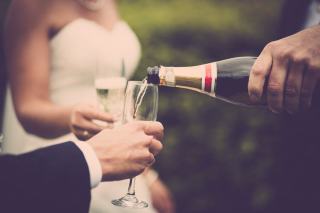
The simple rule: the wine should be at least as sweet as the dish. A lean champagne served with a sweet dessert loses its fruit and seems acidic, which is the most common pairing mistake at weddings and celebrations.
Frequently asked questions about champagne dosage
Does dosage affect how long champagne can age?
Yes, to a degree. Sugar takes part in slow reactions that give aged champagne its honeyed, toasty character, so a dosed wine often evolves faster than an unsweetened one. Undosed wines can age well, but they need an excellent base wine to do so.
Is there sugar in brut champagne?
Usually a little. This category allows up to 12 grams of sugar per litre, so a standard 75 cl glass of brut contains well under a gram of added sugar per serving. Only brut nature has no added sugar, and even it can hold up to 3 g of natural residual sugar per litre.
Why is extra dry sweeter than brut?
The names date from a period when champagne was much sweeter than today. Extra dry was restrained compared with the sweet wines of the time, and the legal categories kept the old names when the leaner styles were added at the bottom of the scale.
Can you taste the difference between 4 g and 8 g of dosage?
Experienced tasters often can, but acidity, ripeness and serving temperature blur the line. A very acidic champagne at 8 g can seem drier than a ripe one at 4 g, which is why the category on the label is a pointer rather than a precise measure of what you perceive.
Return to the best champagne selection for more on houses and serving.