RM on a champagne label means the family that farmed the vines also made the wine: that is grower champagne. Unlike the grandes marques, which blend grapes bought from hundreds of growers into a consistent house style, a grower champagne producer bottles fruit from its own plots, so the wine tastes of one village, one soil and one vintage.
Finding a grower bottle: look for RM (récoltant-manipulant) in the small print of the wine label; expect more variation from year to year than from a big house; start with a producer's non-vintage brut or extra brut before buying its single vineyard or vintage champagne.
What is grower champagne, exactly?
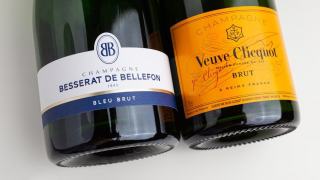
Grower champagne is sparkling wine from the Champagne region made by a vine grower who presses, ferments, ages and bottles the harvest from vineyard land the family owns or farms. The French term is récoltant-manipulant, abbreviated RM. The opposite model is the négociant-manipulant (NM): a champagne house that buys grapes, must or finished wine from many suppliers and assembles them into a brand. Moët et Chandon, Veuve Clicquot and most of the famous labels, including the house behind Dom Pérignon, work this way.
The split is lopsided. Growers own the large majority of the vineyards in Champagne, while the houses sell the large majority of the bottles. For most of the twentieth century, a grower's job was to sell grapes to a champagne house, not to make wine. The shift started in the 1980s and 1990s, when a handful of estates such as Jacques Selosse in Avize and Egly-Ouriet in Ambonnay proved that a single family could make champagne as serious as any prestige cuvée. Wine merchants in the United States and the UK then built whole wine lists around grower champagnes, and the category became a lot more visible.
Two other codes sit close to RM. CM (coopérative de manipulation) is a cooperative that makes wine for its members, and RC (récoltant-coopérateur) is a grower selling a cooperative-made wine under the family name. Both can be good, but neither is grower champagne in the strict sense. In France the category is also called champagne de vigneron, a term that stresses the personal touch of the winemaking family and its terroir. Our guide to every code printed on a champagne label lists the rest.
How does grower champagne differ from the grandes marques?
The difference is a question of goal. A big house aims for a consistent house style: the non-vintage brut you open this year should taste like the one you opened five years ago. To get there, the chef de cave blends dozens of villages, three grape varieties and a large stock of reserve wines. A grower works with a lot of fruit that is small and fixed, often a few hectares spread over one or two villages, so the character of the place and of the year shows through.
| Point | Grower champagne (RM) | Grandes marques (NM) |
|---|---|---|
| Source of grapes | The family's own vineyards | Bought from many growers, plus some owned vineyards |
| Aim | Expression of one village, plot or year | A consistent house style, year after year |
| Production | Small, often thousands of bottles | Large, often millions of bottles |
| Dosage | Frequently extra brut or brut nature | Mostly brut |
| Availability | Specialist merchants, allocations, the estate | Everywhere, including supermarkets |
None of this makes one model better. The houses, described in our overview of the great champagne names, excel at blending and at ageing large reserves; a grower champagne excels at transparency. Many drinkers keep both on hand: a reliable house brut for a party, a grower bottle for the table when they want something to talk about.
Which grape varieties do growers use?
The same three grape varieties as everyone else in Champagne: chardonnay, pinot noir and pinot meunier. The difference is that a grower's blend is dictated by where the vines grow rather than by a recipe. An estate on the Côte des Blancs, around Avize, Cramant and Le Mesnil-sur-Oger, will make mostly blanc de blancs from chardonnay grown on chalk, tight and mineral. On the Montagne de Reims, in grand cru villages such as Ambonnay, Bouzy or Verzenay, pinot noir dominates and the wines have more body. In the Vallée de la Marne, pinot meunier is the local grape, and growers such as Mousse Fils have shown how much it can give when taken seriously. Further south, the Côte des Bar in the Aube is pinot noir country.
A few estates also keep old plots of the rarer permitted varieties, pinot blanc, arbane and petit meslier, and bottle them apart. For a deeper look at each grape, see our page on chardonnay, pinot noir and meunier in Champagne; for the red-grape style, our guide to blanc de noirs covers many grower examples.
Questions people ask about grower champagne
Is grower champagne always better than a big house?
No. RM on the label guarantees where the grapes came from, not how good the wine is. Some growers are brilliant, some are ordinary, and a small estate has no reserve stock to smooth over a difficult vintage. Judge each producer on tasting, not on the code.
Does grower champagne age well?
The best ones do, especially vintage champagne and single vineyard cuvées from grand cru villages. A non-vintage brut from a grower is usually made to be drunk within a few years of disgorgement; many producers now print the disgorgement date on the back label, which helps.
Why is grower champagne popular with sommeliers?
Because each bottle has a story tied to a place and a family, and because the style is often drier and more precise than a commercial brut, which suits food. Sommeliers also like offering a wine list that guests cannot find in a supermarket.
What are the best grower champagnes to try first?
There is no official ranking, but a few names come up again and again among critics and specialist wine merchants. Treat this grower champagne list as a map of styles rather than a top ten.
- Jacques Selosse (Avize): the estate that started the movement; oxidative, wine-like chardonnay, rare and heavily allocated.
- Egly-Ouriet (Ambonnay): powerful, long-aged pinot noir from grand cru vineyards on the Montagne de Reims.
- Pierre Péters (Le Mesnil-sur-Oger): pure, chalky blanc de blancs grand cru, a benchmark for the Côte des Blancs.
- Larmandier-Bernier (Vertus): organic and biodynamic chardonnay, often in extra brut or brut nature.
- Bérêche et Fils (Ludes): precise wines from the Montagne de Reims, a favourite of younger sommeliers.
- Chartogne-Taillet (Merfy): village and plot bottlings from a little-known corner north-west of Reims.
- Agrapart & Fils (Avize): blanc de blancs specialist whose single vineyard wines rank among the finest in the region.
- Ulysse Collin and Cédric Bouchard: single vineyard, single vintage champagne in tiny quantities, for the curious.
- Vilmart & Cie (Rilly-la-Montagne), Pierre Moncuit (Le Mesnil-sur-Oger) and Étienne Calsac (Avize): fresh, well-balanced wines with lively acidity and fine aromas, often easier to find.
- Benoît Lahaye (Bouzy) and David Léclapart (Trépail): natural-leaning pinot noir and chardonnay with a strong sense of place.
Most of these producers also make an entry-level non-vintage brut or extra brut that costs far less than their top cuvées. That bottle is the fairest way to learn a house's style before committing to older vintages or to a prestige bottling.
Where to buy grower champagne
Supermarkets rarely stock grower champagnes, because production is too small for national distribution. To buy grower champagne, the usual routes are:
- Independent wine shops and wine and spirits merchants, who often import directly and can describe each producer's style.
- Online grower champagne specialists, which list estates by village and let you compare labels side by side. Check the RM code on the product photo, not only in the description.
- Restaurants with a serious wine list, a low-risk way to taste before buying a case.
- The estate itself, either at the cellar door or through its own shop, which usually gives access to cuvées that never reach export markets.
Grower bottles are not automatically expensive: many sit in the same bracket as a big-house brut, and some of the value picks in our selection of good champagne on a budget are RM wines. The rarest names, on the other hand, trade at the level of the prestige cuvées of the big houses.
How to visit grower champagne producers
Visiting growers is one of the pleasures of a trip to the champagne region, but it works differently from touring a big house in Reims or Épernay. Some practical tips:
- Reservations: most family estates have no visitor centre. Write or call ahead; turning up unannounced during harvest or bottling is unwelcome.
- Timing: avoid the harvest weeks in late August and September. Late spring and early summer are calmer.
- Transportation: villages are spread across the Montagne de Reims, the Vallée de la Marne, the Côte des Blancs and the Aube. Plan a driver or a local guide if you intend to taste.
- Language: many growers speak English, but not all; a few words of French help.
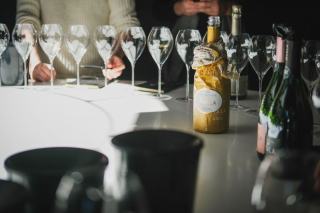
A tasting at a grower's cellar is often led by the person who pruned the vines, which is the whole point. Our map of the champagne regions and their styles helps plan a route by grape and village.
Why the grower movement matters
Grower champagne changed how people talk about champagne. For decades, the wine was sold on brand and occasion; growers pushed the conversation toward vineyard, soil and vintage, as in Burgundy. Their success also nudged the big houses: several now release single vineyard or single village cuvées, lower dosage and print disgorgement dates, ideas that growers popularised. The growing interest in grower champagne is less a fashion than a return to the idea that champagne is a wine first and a sparkling celebration second.
If you want to taste the difference yourself, open a grower blanc de blancs from the Côte des Blancs next to a big-house brut on the same evening. Add a grower rosé or a premier cru white if you want to explore further. The contrast in style, texture, dry finish and length usually explains the whole category better than any description.