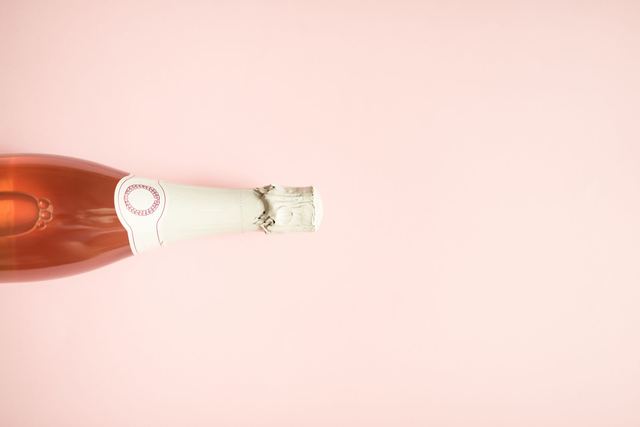
Roughly one bottle of champagne in ten shipped from the region is now a rosé champagne, and Champagne is the only French AOC allowed to make a rosé by blending red wine (vin rouge) into white wine (vin blanc). That assemblage, or a short saignée on pinot noir skins, gives the champagne rosé its pink colour, its red fruit and the price gap with a standard brut from the same maison.
- Colour
- From pale onion skin to deep raspberry, set by the method: assemblage (red wine added) or saignée (skin contact).
- Grapes
- Chardonnay, pinot noir and pinot meunier, with the red wine almost always a still pinot noir from Champagne itself.
- Style
- Brut is the norm; extra brut and brut nature rosés are drier, vintage (millésime) rosés are rarer and longer lived.
What makes a champagne rosé rather than white?
A rosé champagne is a sparkling wine from the Champagne AOC whose base wine has picked up colour before the second fermentation in bottle. Everything else is identical to a white champagne: the same vineyards in France, the same grape varieties, the same méthode champenoise with its second fermentation, the same minimum ageing on the lees. The difference sits entirely in the cuvée, the blend of still wines that goes into the bottle.
That colour has to come from red grapes, because the juice of pinot noir and pinot meunier is white. Left in contact with the skins, it takes on pigment, tannin and aroma. Champagne producers have two legal ways of getting there, and the choice shapes the wine in the glass far more than the pink hue suggests. A rose champagne made by blending tastes different from one made by bleeding the vat, even when both carry the same brut label.
The category is old. Ruinart, the oldest established champagne house, records a shipment of rosé in its ledgers as early as 1764, then described as oeil de perdrix, partridge eye, for its faint copper tint. The modern blended style is usually credited to Madame Clicquot, who in 1818 decided to colour her wine with red wine from Bouzy rather than with elderberry extract, the common trick of the time. Veuve Clicquot still presents that date as the birth of the blended rosé champagne.
How is rosé champagne made? Assemblage versus saignée
Most houses use the rosé d'assemblage method. A white base wine, often dominated by chardonnay and pinot noir, is blended with a small share of still red wine, a vin rouge produced in Champagne under the Coteaux Champenois name. The red share usually sits between 5 and 20 percent of the blend. Villages such as Bouzy, Aÿ, Ambonnay or Les Riceys are the classic sources, because their pinot noir ripens well enough to give a supple, coloured red wine rather than a thin, acidic one.
Blending gives the cellar master control. Colour and red fruit can be adjusted glass by glass during the assemblage, and the result is reproducible from year to year, which is exactly what a house wants for its non-vintage rosé brut. Wines made this way tend to be lighter, finer and closer to the house's white style, with the red wine adding strawberry, cherry and a slightly firmer finish.
The rosé de saignée method works the other way round. Black grapes, usually pinot noir, are crushed and left to macerate for a few hours to a couple of days. When the juice has taken the desired colour, part of it is drawn off, or bled, from the tank and fermented as a rosé wine. The colour is deeper, the tannin more present and the aromas lean towards raspberry, blood orange and spice. The drawback is irregularity: the colour of each vintage depends on the grapes, and the producer cannot fine-tune it afterwards.
A few producers use a third route, a short cold soak often called infusion or maceration, sitting between the two. Louis Roederer applies it to its vintage rosé, letting pinot noir skins steep gently before blending with chardonnay. Whatever the technique, the base wine then follows the traditional method described on our page on how champagne is made step by step: bottling with yeast and sugar, second fermentation, ageing on the lees, riddling, disgorging and dosage.
| Point of comparison | Rosé d'assemblage | Rosé de saignée |
|---|---|---|
| Source of colour | Still red wine (Coteaux Champenois) added to a white base | Skin contact of pinot noir before pressing |
| Typical colour | Pale salmon to light pink | Deep pink to raspberry |
| Flavour profile | Fine, fresh red fruit, close to a white brut | Structured, vinous, darker fruits rouges |
| Consistency | High, colour adjusted at blending | Variable from one harvest to the next |
| Well-known examples | Billecart-Salmon Brut Rosé, Ruinart Rosé, Moët & Chandon Rosé Impérial | Laurent-Perrier Cuvée Rosé, many grower rosés |
Which grape varieties go into a rosé champagne?
The three main grape varieties of the appellation all appear in rosé. Pinot noir carries the weight: it supplies the red wine in an assemblage and the skins in a saignée, along with its aromas of cherry and redcurrant. Pinot meunier brings a rounder, fruitier side and is common in rosés from the Vallée de la Marne and in grower cuvées. Chardonnay gives freshness, tension and a citrus lift, which is why several houses build their rosé on a chardonnay-rich base, much as they do for a blanc de blancs made from chardonnay alone.
The balance between them explains a lot of the style differences. Ruinart Rosé is built on chardonnay with pinot noir red wine, giving a light, floral rosé. Charles Heidsieck Rosé Réserve relies on a high share of reserve wines for a rounder, pastry-like profile. A saignée from pure pinot noir sits much closer to a red wine in its structure. Some growers even make a rosé from pinot meunier alone, a sparkling wine with plenty of fruit and little austerity.
A grand cru or premier cru mention on the label indicates the rating of the villages the grapes come from, not the method or the colour. Great rosé champagne can come from anywhere in the region, though the red wine used in blending is almost always sourced from grand cru or premier cru pinot noir villages on the Montagne de Reims.
Brut, extra brut and vintage: the styles of rosé champagne
The dosage, the small addition of sugar at disgorging, applies to rosé exactly as it does to white champagne. Brut is by far the most common style, dry but rounded. Extra brut and brut nature rosés receive little or no added sugar and show the red fruit and the acidity with nothing to soften them; they suit producers with very ripe grapes and drinkers who find standard rosé a little sweet. Demi-sec rosés exist but remain rare.
Non-vintage rosé is the backbone of the category, blended across several harvests to keep the house style. A vintage rosé, or millésime, comes from a single harvest judged good enough, and spends longer on the lees. These wines gain notes of dried fruit, forest floor and spice with age and are worth keeping for several years. At the top of the range, prestige rosés such as Dom Pérignon Rosé, Krug Rosé, Cristal Rosé from Louis Roederer or La Grande Dame Rosé from Veuve Clicquot are produced in small volumes and command the highest prices of the region. Their scarcity also makes them the core of champagne investment, a niche where supply shrinks with every bottle opened.
Why does a rosé cost more than the white of the same house? Making it takes an extra step, whether producing a red wine good enough to blend or running a separate saignée, and red wine in Champagne is scarce because the climate rarely ripens pinot noir fully. The houses also know that demand for rosé holds up well. If budget matters, many good non-vintage rosés appear in our selection of quality bubbles on a budget.
What does rosé champagne taste like?
The first impression is fruit. A young blended rosé smells of strawberry, raspberry, redcurrant and sometimes rose petal, with the citrus freshness of chardonnay behind. A saignée rosé goes darker: black cherry, blood orange, pepper. With age, both styles move towards dried fruit, tea and light spice, and the colour turns from pink to copper.
On the palate, a rose champagne usually feels a little firmer than a white brut, because the red wine or the skin contact adds a touch of tannin. That grip is what makes it such a good partner for food. The bubbles are the same as in any champagne; the colour does not change the mousse, and a well-made rosé should be as fine and persistent as the white of the same house.
The colour itself says little about quality. A very pale rosé is not necessarily a lighter wine, and a deep one is not necessarily better. Judge the balance between fruit, acidity and finish, and use the colour only as a hint of the method: pale often means blending, dark often means saignée.
What food pairs well with rosé champagne?
Rosé champagne is the most versatile wine of the appellation at the table. A pale brut rosé works with smoked salmon, prawns, sushi, tuna tartare and mild goat's cheese. Richer rosés, especially saignée styles, stand up to duck breast, pigeon, grilled lamb chops, veal or a mushroom risotto, dishes where a white brut would feel too light.
Red fruit desserts are the classic pairing: strawberry tart, raspberry pavlova, a summer fruit salad. Keep the dessert less sweet than people expect, or choose a slightly higher dosage, because a very sweet dish makes a brut taste sharp. For cheese, try Chaource or a young Brie de Meaux. More ideas, dish by dish, are gathered in our guide to champagne food pairings beyond the apéritif.
Serve rosé champagne at 8 to 10 degrees, slightly warmer than a light white brut, so the fruit and the vinous side can show. A tulip glass or a white wine glass works better than a narrow flute, especially for vintage and saignée rosés.
Which rosé champagnes are worth trying first?
For a first comparison, open one blended and one saignée rosé side by side. Billecart-Salmon Brut Rosé is the benchmark for the fine, pale style, with a lot of chardonnay and precise red fruit. Laurent-Perrier Cuvée Rosé, made by saignée since 1968, is darker and fuller, and remains one of the most recognisable rosé champagnes in the world.
Among the big houses, Ruinart Rosé offers a floral, chardonnay-led style, Moët & Chandon Rosé Impérial a fruity and generous one, and Veuve Clicquot Rosé a structured blend faithful to the history of Madame Clicquot. Grower producers often work with more pinot meunier or with extra brut dosages, and their rosés can be more distinctive; check the RM mention on the label to spot them.
Rosé also sits next to another style made mainly from red grapes, the white champagne pressed from black grapes. To compare the two, read our page on blanc de noirs, a full-bodied white from red grapes. And if the bottle you have in mind is a sparkling rosé from outside the region, a Crémant or a Prosecco rosé, the rules of the appellation no longer apply: our comparison of champagne and other sparkling wines explains what changes.