Five champagne regions share a single appellation of about 34,000 hectares of vineyard in north-eastern France, between the city of Reims, Épernay and the Aube: the Montagne de Reims, the Vallée de la Marne, the Côte des Blancs, the Côte de Sézanne and the Côte des Bar. Each champagne region matches its own terroir with a dominant grape, and that pairing drives most of the difference in style between two bottles of champagne wine from France.
- Structure and red fruit
- Montagne de Reims and Côte des Bar, planted mostly with Pinot Noir.
- Round, early-drinking fruit
- The Marne valley west of Épernay, where Meunier dominates.
- Tension and citrus
- Côte des Blancs and its southern extension, planted with Chardonnay.
How many champagne regions are there, and where do they sit?
The official answer from the Comité Champagne is four main wine-growing areas: the Montagne de Reims, the Vallée de la Marne, the Côte des Blancs and the Côte des Bar. Most wine guides treat a fifth area on its own, because its soils and its softer white-grape style set it apart from the Côte des Blancs further north. You will also see smaller zones named on specialist maps, such as the Vitryat around Vitry-le-François and the isolated hill of Montgueux near Troyes.
All of them sit inside the Champagne appellation, which covers vineyards in five French départements: Marne, Aube, Aisne, Haute-Marne and Seine-et-Marne. The Marne holds the largest share, the Aube comes second with roughly a quarter of the planted area. The heart of the region is a triangle drawn between the city of Reims, Épernay and the river valley, roughly 150 kilometres east of Paris. The Côte des Bar lies much further down the map, closer to Chablis in Burgundy than to Reims.
A single champagne map therefore hides a lot of distance. From the northern slopes of Verzenay to the southern hills of Les Riceys, the vineyard stretches over more than 150 kilometres, with changes in soil, altitude and exposure that the grapes register in every vintage.
Reading a champagne wine map
A good champagne region map shows the vineyards as thin bands on hillsides rather than as a solid block. Vines in this cool northern climate need the best-exposed hillsides, where cold air drains away and the sun warms the soil. The valley floors and the forested plateaus above are left to woods and cereal crops.
On the map you will find around 320 villages classed as crus. Seventeen of them hold grand cru status and 42 are premier cru; the rest are simply entitled to the Champagne name. These ratings belong to the village, not to a single plot, which is why the name of the commune matters so much on grower labels.
| Sub-region | Main grape | Dominant soil | Typical profile |
|---|---|---|---|
| Montagne de Reims | Pinot Noir | Clay and sand over a limestone base | Powerful, red fruit, long-lived |
| Vallée de la Marne | Meunier | Clay, marl, sand | Round, fruity, early-drinking |
| Côte des Blancs | Chardonnay | Belemnite chalk near the surface | Taut, mineral, citrus |
| Côte de Sézanne | Chardonnay | Limestone with clay and sand | Softer, floral, riper |
| Côte des Bar (Aube) | Pinot Noir | Kimmeridgian marl and limestone | Ripe, generous, approachable |
Montagne de Reims: Pinot Noir on a wooded hill
This sub-region is less a mountain than a forested plateau that rises between Reims and Épernay. Vines wrap around its flanks in a horseshoe, which gives an unusual mix of exposures: north-facing slopes at Verzenay and Verzy, eastern exposures around Trépail, and warmer south-facing sites at Bouzy and Ambonnay above the river.
Pinot Noir is the grape of this terroir. On the cooler northern side it produces wines with firm acidity and a taut structure; on the southern side it ripens more fully and gives the depth of red fruit that houses use to build body in their blends. Bouzy is also known for its still red wine, sold as Coteaux Champenois.
Nine grand cru villages sit here, the largest group in Champagne: Ambonnay, Beaumont-sur-Vesle, Bouzy, Louvois, Mailly-Champagne, Puisieulx, Sillery, Verzenay and Verzy. The subsoil, often under a layer of sandy loam, holds water in reserve during dry summers. Champagne houses based in Reims, such as Louis Roederer, Veuve Clicquot and Krug, draw heavily on these vines for their prestige blends.
Vallée de la Marne: frost, marl and a hardy grape
This valley follows the river westward from Épernay towards Château-Thierry and the edge of the Paris basin. The soils change as you move west: limestone around Aÿ and Mareuil-sur-Aÿ gives way to heavier clay, marl and sand, which hold the cold and suit a hardy grape.
Meunier buds late and ripens early, so it copes better with the spring frosts that settle in the valley bottom. It gives round, fruity wines with an easy charm, and it long played a supporting role in house blends. A new generation of growers now bottles this grape on its own, and some of these cuvées show real depth and ageing potential.
The eastern end of the valley is different. Aÿ, a grand cru, faces south and grows Pinot Noir of great ripeness; Bollinger has its headquarters there, and Tours-sur-Marne, the valley's other top-rated commune, is home to Laurent-Perrier. Épernay, where the Avenue de Champagne lines up houses such as Moët & Chandon, Pol Roger and Perrier-Jouët, sits at the meeting point of the valley and the Côte des Blancs.
Côte des Blancs: the white-grape ridge
South of Épernay, the Côte des Blancs is an east-facing ridge about 20 kilometres long, planted almost entirely with Chardonnay. Its name refers to the white grape, not to the colour of the soil, although the white subsoil here comes very close to the surface.
That chalk, rich in the fossils of belemnites, is the key to the style. It drains well, keeps the roots cool and releases water slowly, which gives wines of tension, precision and a saline, mineral finish. Young wines from Cramant, Avize, Oger and Le Mesnil-sur-Oger can feel austere; with time in the cellar they develop notes of brioche, hazelnut and dried citrus.
The sub-region counts six grand cru villages: Avize, Chouilly, Cramant, Le Mesnil-sur-Oger, Oger and Oiry. It is the natural source of single-grape white cuvées known as blanc de blancs, and many of the most sought-after growers of the region work here, alongside the vineyards of large houses.
Frequently asked questions about the champagne regions
What are the four main champagne regions?
The Comité Champagne lists four main areas: the Montagne de Reims, the Vallée de la Marne, the Côte des Blancs and the Côte des Bar. Many guides add a fifth sub-region, just beyond the Côte des Blancs, because its wines have a softer, riper profile.
Which champagne region is the best?
None is better in absolute terms: each gives a different style. The Côte des Blancs suits lovers of fine, mineral Chardonnay, the hills around Reims suit those who want power and length, and the Côte des Bar offers ripe, fruit-led champagne at friendlier prices.
Is the Aube part of Champagne?
Yes. The Aube department, home to the Côte des Bar, has been fully part of the Champagne AOC area since 1927. It grows around a quarter of the Champagne vineyard, mostly Pinot Noir, and supplies many houses in Reims and Épernay.
Côte de Sézanne, softer and riper
This area continues the same ridge south-west of the Côte des Blancs, around its small market town. The soil here is heavier and sandier, and the vines face south-east, so the grapes ripen a little earlier and more fully.
The result is a white wine with a softer, more floral and slightly exotic character, less sharp in its youth than wines from Cramant or Avize. The area has no top-rated commune, which keeps its bottles at more accessible prices. Houses use it to add roundness to their non-vintage blends, and a handful of growers now make single-village cuvées that show what this terroir can do on its own.
Côte des Bar: Pinot Noir in the Aube
The Côte des Bar lies about 100 kilometres south-east of Épernay, between the towns of Bar-sur-Aube and Bar-sur-Seine. Its soils are not chalk but Kimmeridgian marl and limestone, the same geological layer found in Chablis, and the climate is slightly warmer and more continental than around Reims.
The black grape covers most of the vineyard here. It gives ripe, generous wines with red and black fruit, soft texture and a warm finish, often at better value than wines from the hills near Reims. The village of Les Riceys is the only commune entitled to three labels of origin: Champagne, Coteaux Champenois and the rare still Rosé des Riceys.
The Aube was long treated as a supplier of grapes to the big houses further north. Its reputation changed thanks to family estates such as Drappier in Urville and to a wave of independent growers who bottle their own champagne, many of them working organically. Today the Côte des Bar is one of the most dynamic parts of the region.
Why the terroir of Champagne is so specific
Three forces shape the terroir of Champagne: the northern climate, the chalk and the slopes. The region lies near the northern limit of vine growing in France, with an average annual temperature close to 11 °C. Grapes ripen slowly and keep high acidity, which is exactly what a sparkling wine needs to stay fresh through years on its lees.
Chalk is the second factor. It dominates the northern vineyards, where it can reach depths of 200 metres, and it acts like a sponge, storing winter rain and feeding the vines in summer. It also made the cellars possible: the pits dug under Reims and Épernay, the crayères, keep a steady cool temperature all year round and hold millions of bottles during their secondary fermentation and ageing.
The slopes complete the picture. Most vines grow on hillsides between 90 and 300 metres, where frost risk is lower and drainage is better. The combination of these three elements, and the way it changes from one sub-region to another, is why the choice of grape varieties in each area follows the ground rather than fashion.
Grape varieties and blending across the regions
Three grapes make up almost all of the vineyard: Pinot Noir with around 38 percent, Meunier with about 32 percent and Chardonnay with about 30 percent, according to the Comité Champagne. Pinot Blanc, Arbane, Petit Meslier and Pinot Gris are also allowed, but they cover only a tiny share.
Because each sub-region favours one grape, blending across regions is the traditional way to build a house style. A classic non-vintage brut might combine Pinot Noir from the Montagne de Reims for structure, fruit from the western valley and Chardonnay from the Côte des Blancs for freshness, with reserve wines from earlier harvests to keep the taste consistent over time.
| Area | Top-rated communes | Main base |
|---|---|---|
| Montagne de Reims | 9 | Reims |
| Côte des Blancs | 6 | Épernay (north end) |
| Marne valley | 2 (Aÿ, Tours-sur-Marne) | Épernay, Château-Thierry |
| Côte de Sézanne | 0 | Small market centre |
| Côte des Bar | 0 | Bar-sur-Aube, Bar-sur-Seine |
Growers, by contrast, often work a single commune and bottle what their own vines give. Their labels tell you much more about one precise place, and they are the best way to taste how strongly the sub-region marks the wine.
A short history of the Champagne region
Champagne was a historical province of France long before it became a wine name. Its fairs made the towns of Troyes and Provins major trading hubs in the Middle Ages, and the cathedral of Reims hosted the coronation of French kings for centuries. The wine of the region was first still, often pale red, and competed with Burgundy at the royal court.
Sparkling production developed in the late 17th and 18th centuries, when the first houses were founded in Reims and Épernay. The boundaries of the Champagne area were fixed in 1927 after years of disputes, including the riots of 1911 when local growers protested against the use of grapes from outside the region, and the Aube fought for its place. Champagne AOC status followed in 1936. Today champagne production in France is counted in hundreds of millions of bottles: shipments have moved between roughly 270 and 330 million bottles a year over the past decade, according to the Comité Champagne. The full story is told on our page about how champagne went from monastery cellars to a global icon. In 2015, UNESCO added the Champagne hillsides, houses and cellars to its World Heritage list, recognising the Avenue de Champagne in Épernay, the Saint-Nicaise hill in Reims and the historic hillsides of Hautvillers, Aÿ and Mareuil-sur-Aÿ.
Visiting the regions: cellars and wine tours
Most wine tours in Champagne start in Reims or Épernay, both easy to reach from Paris by train in under an hour and a half. Reims is a city of cellars: Pommery, Taittinger, Ruinart and Veuve Clicquot open their chalk galleries to visitors, and the cathedral stands a short walk from the city center. Épernay offers a different experience, with the houses of the Avenue de Champagne lined up side by side.
To understand the sub-regions, the best approach is to leave the cities and drive the vineyard routes. The loop around the wooded plateau passes Verzenay, with its lighthouse and wine museum, and Bouzy. The Côte des Blancs route runs through Cramant, Avize and Le Mesnil-sur-Oger, where small growers receive visitors on appointment. In the Aube, the villages around Les Riceys and Essoyes, where the painter Renoir lived, show a quieter, more rural side of Champagne.
Book cellar tours in advance, especially at weekends and during the harvest in September, when many estates are busy picking and pressing.
Many visitors choose a hotel in Reims or Épernay and spend one day in each town, then a third day on the wine roads. A tasting at a small family maison often tells you more about one specific terroir than a large tour, and the people who pour the wine are usually the ones who work the vines. Check opening days before you travel: small estates rarely receive guests on Sundays, and booking by email a week ahead is the norm. For the Côte des Bar, plan the trip by car, because the distance from Reims is close to two hours on the road and public transport there is thin. The landscape of the Aube, with its rolling hills, woods and rivers, is a good reason to explore the southern part of Champagne at a slower pace.
How to taste the difference between regions
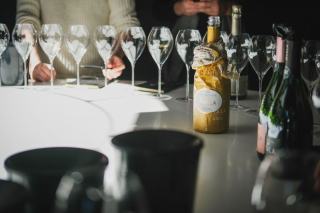
The simplest way to learn the champagne regions is to open two or three bottles side by side. Choose a single-grape white from a Côte des Blancs grand cru, a Pinot Noir-led champagne from the Montagne de Reims or the Côte des Bar, and a Meunier cuvée from the Marne valley. Serve them at the same temperature, in the same glass, and compare aroma, weight and finish.
The Chardonnay will often show citrus, white flowers and a chalky, saline edge. The Pinot-led wine will feel wider, with red fruit and more grip. The third will be fruit-forward and supple. None of these notes is a rule, because producers, vintages and dosage all change the picture, but after a few such tastings the character of each region of Champagne becomes much easier to recognise on the label and in the glass.