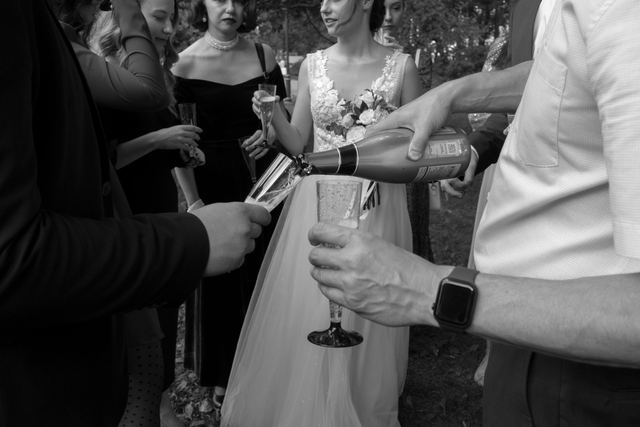
To serve champagne well, chill the bottle to 7 to 9 °C, pour it into a tulip-shaped wine glass rather than a coupe, ease the cork out with a sigh instead of a pop and tilt the glass as you pour. Those four gestures decide how much of the wine's bubbles and aromas reach your guests.
- Temperature
- 7 to 9 °C for a non-vintage brut, 10 to 12 °C for vintage and prestige cuvées.
- Glass
- A tulip or a white wine glass; the flute is acceptable, the coupe is for decoration.
- Opening
- Thumb on the cork, bottle at 45 degrees, turn the bottle and not the cork.
What is the ideal temperature for champagne?
The ideal temperature depends on the style in the bottle. A non-vintage brut, the everyday wine of most champagne houses, tastes fresh and precise between 7 and 9 °C. Colder than that and the aromas close up, the acidity turns sharp and the bubbles feel aggressive on the tongue. A vintage champagne, a blanc de blancs with some age or a prestige cuvée deserves a little more warmth, around 10 to 12 °C, so that the notes of brioche, toasted nuts and ripe fruit can open in the glass.
Serving a wine too warm is the opposite mistake: above 12 or 13 °C the alcohol becomes noticeable, the mousse turns coarse and the bottle gushes when opened because warm wine holds its carbon dioxide less well. The pressure inside a champagne bottle is around six bar, roughly three times that of a car tyre, and temperature has a direct effect on how that pressure behaves when the cork comes out.
Remember that the wine warms by one or two degrees within minutes of being poured. Starting at the low end of the range and filling the glasses a third of the way, then topping up, keeps each serving close to the ideal temperature from first sip to last.
How do you chill a bottle quickly and safely?
The most reliable method is the champagne bucket: fill it with half ice and half cold water, plunge the bottle up to the neck and wait about 20 minutes. Water surrounds the glass completely, which is why it chills far faster than ice alone. A handful of salt in the water speeds things up further. The fridge works too, but a standard bottle needs three to four hours on a shelf, and keeping champagne in the fridge for weeks dries out the cork and dulls the wine.
- Ice bucket with water: 20 minutes, the method of sommeliers.
- Fridge: three to four hours, lying down, ideal when you plan ahead.
- Freezer: avoid it; a forgotten bottle can freeze and push its cork or crack.
Once opened, keep the bottle in the bucket between pours. If some is left at the end of the evening, a good stopper and the fridge will help, and our guide on how to keep champagne fizzy after opening a bottle explains which tricks work and which are myths.
Which type of glass should you use?
The type of glass shapes what you smell and how long the bubbles last. The tall, narrow flute became the standard in the 20th century because it keeps the mousse lively and shows off the rising bead, but its small opening traps the aromas. Many champagne houses and sommeliers now prefer a tulip-shaped glass: wider at the bowl, gently tapered at the rim, it concentrates the bouquet while keeping the effervescence active. For a great vintage or a mature cuvée, a classic white wine glass gives the wine even more room to breathe.
| Glass | Bubbles | Aromas | Best for |
|---|---|---|---|
| Champagne flute | Kept well | Muted | Aperitif, receptions, young brut |
| Tulip-shaped glass | Kept well | Expressive | Almost every champagne |
| White wine glass | Fade faster | Very expressive | Vintage, prestige cuvée, food |
| Coupe | Lost quickly | Dispersed | Champagne towers, cocktails |
The coupe, fashionable during the Belle Époque, still has a place for a champagne tower or a cocktail, but its wide flat bowl lets the bubbles escape almost instantly.
How do you open a bottle of champagne without the pop?
A loud pop looks festive but wastes wine and can injure someone: the cork leaves the neck fast enough to hurt an eye. The quiet method is the one taught in every serious restaurant.
- Remove the foil with the tab or a knife.
- Place your thumb on the cork, then untwist the wire cage (the muselet) about six half-turns. Keep the thumb there from now on.
- Hold the bottle at 45 degrees, pointed away from people, a napkin over the cork if you like.
- Grip the cork firmly and turn the bottle slowly, not the cork.
- Let the pressure push the cork out gently; it should leave with a soft sigh.
Keep the bottle tilted for a second or two after the cork is out: the wine settles and does not overflow. Sabrage, opening with a blade along the seam, is a spectacular tradition, but it is best left to people who have practised it.
How to pour and how much to serve
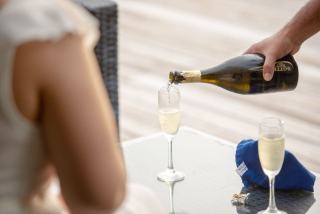
Pour in two stages. Tilt the glass slightly and let the champagne run down the side, which limits the foam, then fill to about a third, wait for the mousse to settle and top up to half or two thirds. Hold the bottle by its base or with your thumb in the punt, the hollow at the bottom, rather than by the neck, which warms the wine. A standard 75 cl bottle gives six generous glasses or eight smaller ones; for a reception, plan roughly half a bottle per guest for an aperitif.
When several wines are on the table, serve them in a logical order: lighter and drier first, then fuller and older wines, and sweeter styles such as demi-sec with dessert. The same logic guides champagne food pairings that work at every course, from oysters with an extra brut to a fruit tart with a demi-sec.
How to serve pink champagne and older vintages
A rosé is served slightly less cold than a light brut, around 8 to 10 °C, because its red-fruit aromas and its touch of structure show better with a little warmth. A tulip glass suits it perfectly. Whether it is made by saignée or by blending, the grape and the method matter less than a serving temperature a notch above that of a light brut.
A vintage bottle or a prestige cuvée needs time: take it out of the cellar, chill it gently to 10 to 12 °C, open it a few minutes before serving and use a white wine glass. Some sommeliers even decant a very mature vintage champagne for a few minutes, a practice that surprises guests but softens the mousse and opens the bouquet. Pour smaller servings so each glass stays at the right temperature.
How to enhance the champagne tasting experience
A few simple tips turn a correctly chilled bottle into a memorable tasting experience. Choose a quiet moment for the first sip, before food, so that the aroma of the champagne is not masked by a strong dish. Swirl the glass gently rather than vigorously: a light movement releases each aroma without killing the bubbles. Look at the bead first, then smell, then taste, and note how the wine changes as it warms by a degree or two; our page on how to describe what you taste in champagne gives the vocabulary for it.
Elegance is also in the details of the presentation: a white napkin around the neck of the bottle to catch drips, a chilled bucket on the table, glasses set out before the guests arrive. These essential gestures help everyone enjoy the champagne at its best, and they matter just as much when you choose a bottle as a gift for someone else's celebration: offer it already chilled, with a word on the ideal temperature and the right glass. Chilling, pouring and presenting with care make these moments feel special without any need for sabering or other theatrics. The same rules apply to any sparkling wine, but champagne, with its finer mousse and longer ageing, rewards them the most.
Common mistakes when serving champagne
- Serving it ice cold: below 6 °C most of the aromas disappear.
- Shaking or spraying: wasted wine, and a bottle that loses its pressure for the next glass.
- Filling the glass to the rim: nothing left to smell and the wine warms before it is finished.
- Glasses washed with soap and left with residue: a film of detergent kills the bubbles.
- Storing opened bottles with a spoon in the neck: a charming myth that does nothing; use a proper stopper.
Caring for your glasses after serving
Few guides mention it, yet the state of the glass matters as much as the bottle. Bubbles form on tiny imperfections of the glass wall; a glass rinsed in hot water without detergent and dried with a lint-free cloth keeps a lively stream. Traces of soap or rinse aid, on the other hand, flatten the mousse and leave a greasy film on the surface. Store the glasses upright in a cupboard free of cooking smells, and give them a quick rinse and polish before the next occasion.
Serving ideas for special occasions
A bottle opened for a birthday, a wedding toast or a quiet evening can be served in very different ways. For an aperitif, a young brut or a blanc de blancs works well with salty snacks and seafood. For a large party, magnums keep the wine fresher than several standard bottles and make a strong impression. For brunch, champagne cocktails such as the mimosa or the classic sugar cube and bitters recipe, detailed in our guide to classic and modern champagne cocktails, let you use a simple, dry wine. Whatever the moment, the same art applies: right temperature, clean glass, gentle opening, careful pour.
Flutes, chilling times, freezers and glasses per bottle
Should champagne be served in a flute or a wine glass?
A tulip-shaped glass or a white wine glass shows more aromas than a narrow flute, while still keeping the bubbles. The flute remains fine for a young brut at an aperitif.
How long does champagne take to chill in an ice bucket?
About 20 minutes in a bucket filled with half ice and half cold water, against three to four hours in the fridge.
Can you put champagne in the freezer?
Only for a few minutes and with a timer. A forgotten bottle can freeze, push its cork or crack, and the wine will be too cold to taste properly.
How many glasses are in a bottle of champagne?
A standard 75 cl bottle gives six generous glasses or about eight smaller servings.