A prestige cuvee champagne, also called a cuvée de prestige or tête de cuvée, is the rare cuvée a Champagne maison places above every other wine it makes: a strict selection of grand cru terroirs, the longest ageing on the lees and a release often limited to one millésime. Dom Pérignon, Cristal and Krug Clos du Mesnil are the signature examples of this prestige champagne.
Who sets the standard: a prestige cuvée is defined by the house, not by law. Expect grand cru fruit, six to ten years of cellar ageing before release and a style that shows the house at its most precise. It is not automatically better value than the same house's vintage bottling, and it rewards patience more than any other champagne.
What is a prestige cuvee champagne?
No appellation rule defines a cuvée de prestige. The Champagne regulations set a minimum of 15 months on the lees for non-vintage wine and three years for a vintage; everything beyond that is the house's own decision. A prestige cuvee is simply the bottle a producer chooses to sign as its best, and the label usually says so through a name rather than a mention: Grand Siècle, Belle Époque, Comtes de Champagne, Sir Winston Churchill.
The old trade term tête de cuvée goes back to the press. The first, gentlest pressing of the grapes gives the purest juice, and houses reserved it for their finest blend. Today the phrase covers the whole idea of a grande cuvée: selected vineyards, the first juice, long ageing and small volumes. Most houses you will meet on our overview of the great champagne houses and their styles make exactly one.
What makes a cuvée prestigious?
Four things separate a prestige cuvée from the rest of a house's range, and all of them cost time or grapes. Together they explain the quality, the rare volumes and the tasting experience that justify the name.
- Fruit selection. The blend draws mostly or entirely on grand cru villages: Avize, Cramant and Le Mesnil-sur-Oger for Chardonnay, Aÿ, Bouzy and Verzenay for Pinot Noir.
- Time on the lees. Where a non-vintage brut may rest two or three years, a prestige wine commonly spends six to ten, sometimes more, before disgorgement. That contact with the yeast builds texture and the toasty, nutty notes collectors look for.
- Vintage declaration. Many are made only in years the cellar master judges worthy. Salon, a single-village blanc de blancs from Le Mesnil, has been released in only a few dozen vintages since its first commercial release.
- Savoir-faire in the cellar. Hand riddling, oak fermentation at some houses, and a final blending decision that can hold back wine for years.
The grape varieties matter too. Chardonnay gives the finesse and length that age so well, Pinot Noir the structure; our page on Chardonnay, Pinot Noir and Pinot Meunier explains how each shapes the glass.
The best prestige cuvées, house by house
A list of the best prestige cuvées always starts with the same names, and each one has a clear identity.
Dom Pérignon (Moët & Chandon)
The most recognised champagne name in the world. Always a vintage, always a blend of Chardonnay and Pinot Noir, and released only in years the house declares. Later releases of the same vintage, the Plénitudes, show what extra decades on the lees do.
Cristal (Louis Roederer)
Created in 1876 for Tsar Alexander II, Louis Roederer's Cristal is still bottled in clear glass. Today it comes from the house's own biodynamically farmed grand cru vineyards, with a tension and purity that make it one of the most collected wines in Champagne.
Krug Grande Cuvée and Krug Clos du Mesnil
Krug Grande Cuvée is the rare prestige wine that is deliberately multi-vintage: each edition blends well over a hundred wines from a decade or more of harvests. Krug Clos du Mesnil, from a walled plot of under two hectares, is its opposite, a single-vineyard, single-variety blanc de blancs made in tiny quantities since the 1979 vintage.
Other names that serious buyers follow
Taittinger Comtes de Champagne Blanc de Blancs for chalky, mineral Chardonnay. Perrier-Jouët Belle Époque in the anemone bottle first designed by Émile Gallé in 1902, for floral finesse. Pol Roger Sir Winston Churchill, Pinot-led and powerful. Bollinger R.D., released recently disgorged after long ageing. Billecart-Salmon Cuvée Nicolas François, and Laurent-Perrier Grand Siècle, a blend of three vintages. Veuve Clicquot La Grande Dame completes the list, a Pinot Noir expression of the house style. For blanc de noirs lovers, a handful of growers now make their own prestige bottling from single plots of Pinot Noir.
What is the difference between a cuvée and a vintage?
In Champagne, cuvée has two meanings. Technically it is the first-pressed juice, and in everyday use it means a blend, any blend, bottled under one name. A vintage champagne is a blend from a single year's harvest and carries that year on the label. So every vintage champagne is a cuvée, but not every cuvée is a vintage.
A prestige cuvée can be either. Dom Pérignon and Cristal are vintage wines; Krug Grande Cuvée and Grand Siècle blend several years on purpose, because the house believes a blend expresses its style better than any single year. Most houses also make a standard vintage brut below their prestige wine. That bottle often comes from the same year and some of the same vineyards, and it is worth comparing: the guide to vintage champagne and the years worth drinking lists the harvests that produced both.
How to choose a prestige cuvée
Choosing a prestige cuvée is less about the famous label than about matching a style to a moment and a palate.
- Pick the style first. Blanc de blancs (Comtes de Champagne, Salon, Clos du Mesnil) is taut and saline; Pinot-dominant blends (Churchill, Bollinger R.D.) are broader and suit food; balanced blends (Dom Pérignon, Cristal) sit between the two.
- Look at the age. A young release is often tight and closed. A bottle five or more years past release, bought from a merchant who stores wine well, usually gives more pleasure than the current vintage.
- Check the disgorgement date when the back label gives it. It tells you how long the wine has aged with and without its lees.
- Consider the house's vintage below it. For drinking rather than collecting, it can deliver much of the same character.
- Buy from a trusted source. Prestige wine is a target for counterfeiters and poor storage. A specialist merchant with provenance records is safer than an unknown online seller.
If the bottle is a present, the champagne gift guide suggests where a prestige cuvée makes sense and where a smaller grower's wine surprises more.
Is a prestige cuvée worth it?
For a landmark birthday, an engagement or a long-planned dinner, yes: the complexity, the length on the palate and the sense of occasion are real, and no standard brut reproduces them. For a party of twenty, no; the subtleties disappear in a crowd and a good non-vintage does the job.
The angle few buyers consider is time. A prestige cuvée is the champagne that gains most from patience, and many are opened far too young. If you buy one to keep, store it lying down, in the dark, at a steady cool temperature; our notes on how long to keep your bottles give realistic windows. A well-kept bottle opened ten or fifteen years after release often shows honeyed, toasted notes that the young wine only hinted at.
How to serve prestige cuvée champagne
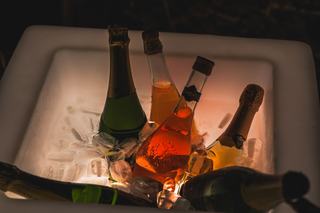
Serve a prestige cuvée a little warmer than an everyday brut, around 10 to 12 °C, so the aromas open. Chill it in the fridge for a few hours or in an ice bucket with water for about twenty minutes, never in the freezer. Use a tulip or white-wine glass rather than a narrow flute: the wider bowl lets an older wine breathe. Open it gently, and pour a small first measure to let the bubbles settle. Food should be simple and precise: oysters or scallops for a blanc de blancs, roast poultry or aged Comté for a Pinot-led blend. The full serving guide covers opening and glassware in detail.
Common questions about prestige champagne
Is a prestige cuvée always a vintage champagne?
No. Many are vintage wines, like Dom Pérignon and Cristal, but Krug Grande Cuvée and Laurent-Perrier Grand Siècle are multi-vintage blends by design.
How long can a prestige cuvée age?
In a good cellar, most will improve for ten to twenty years after release, and great vintages can go further. Rosé versions and very young releases benefit from the same patience.
What does tête de cuvée mean on a champagne?
It refers to the first and finest pressing of the grapes, and by extension to the top blend of a house, the one made from its best juice and best vineyards.