A reserve wine is a still wine from earlier harvests that a champagne house keeps aside, sometimes aged for decades, to blend into its non-vintage cuvée. What is reserve wine worth to the buyer? Its proportion, more than the price, tells you how much ageing, balance and quality sit in the bottle, as the styles of the major houses show.
- In Champagne
- Reserve wines are older still wines held back to keep a house style constant from year to year.
- On other wine labels
- The word reserve has a legal definition only in some regions, such as Rioja Reserva or Barolo Riserva.
- For the buyer
- A producer who states the proportion of reserve gives you one of the most useful facts about the wine.
What does the term reserve wine mean in Champagne?
In Champagne, a reserve wine is not a finished bottle but a component. After each harvest, the house ferments its base wines, uses most of them for the coming blend, and holds a share back in the cellar. Those held-back wines become the reserve, a library of past years that the cellar master can draw on for as long as the house policy allows.
The reason is climate. Champagne sits at the northern limit of wine growing, and no two harvests resemble each other: one year gives ripe, generous grapes, the next gives sharp acidity and little fruit. A house that has spent a century building a recognisable style cannot let the weather rewrite it every year. Blending the young wine with reserve wines from several earlier vintages lets it reproduce the same taste in each release. That is the purpose of a non-vintage cuvée, and it is an exercise in reproduction rather than expression.
This also corrects a common assumption. A non-vintage champagne is often treated as the lesser wine of a house, with the vintage bottle as the real thing. In practice, repeating a style with different raw material each year is the harder exercise. The reserve is the tool that makes it possible, and a house with deep, well aged reserves has a real quality advantage over a producer who has to work with one or two years only.
How are reserve wines made and stored?
A reserve wine starts like any base wine: grapes are pressed, the juice ferments into a still, dry wine, and the house tastes and classifies the lots by village, grape variety and quality. The lots judged most stable and most typical of the style are set aside. What happens next is where houses differ most.
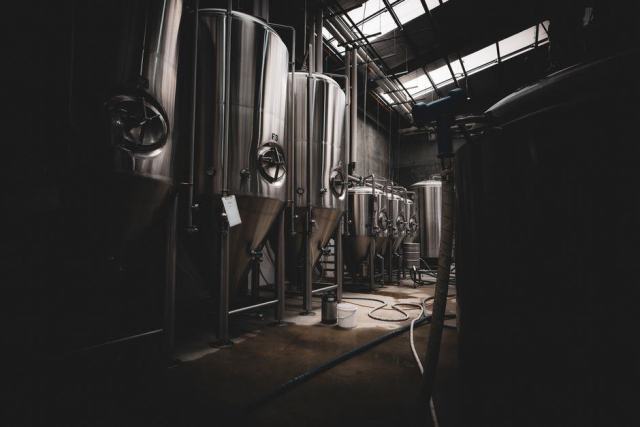
- Stainless steel tanks keep the wine almost unchanged. Freshness and fruit are preserved, and the reserve adds consistency more than flavour.
- Oak barrels and large casks let a little oxygen in. The wine gains texture, nutty and oxidative notes, and it brings more character to the blend.
- Bottles or magnums, sometimes kept under cork, age the reserve slowly and preserve a very fresh aromatic profile over long periods.
- Perpetual reserves, a single blend topped up each year with the new wine and drawn from as needed, work like a solera: a small fraction of very old wine stays present indefinitely.
Each method leaves a different signature. It is a large part of why two houses buying grapes from the same villages produce wines that taste nothing alike. A reserve aged in oak for ten years will not give the same result as one kept cold in steel for three, even if both are made from pinot noir from the same slope.
Champagne regulation also frames the practice. Beyond the yield a grower may sell each year, the interprofession allows part of the harvest to be stored as an individual reserve, within a ceiling set per hectare. This reserve system was designed as insurance against poor harvests, and it gives producers a legal way to build the stocks that non-vintage blending depends on.
Why does declaring a vintage cost a house something?
A vintage is declared only when a year is judged capable of standing alone. Doing so means taking the best wine of that year out of the blending pool, which is exactly the material that would have strengthened the non-vintage cuvée and the reserve for years afterwards. The decision is therefore not a simple celebration of a good harvest but an arbitrage between the vintage bottle and the long term quality of the house style.
This explains why some excellent years are never declared by certain houses, and why others declare almost every good year. A house whose reputation rests on its non-vintage will protect its reserve first. You can compare the logic with our guide to vintage champagne and the years worth drinking: a declared vintage expresses a single year, the non-vintage expresses the house through time.
Reserve wine questions buyers ask most
Is a champagne with more reserve wine better?
Not automatically. A high proportion of reserve wine gives more roundness, complexity and consistency; a low one gives a fresher, more vintage-like wine that varies more from release to release. Neither is better, but knowing which you are drinking explains the taste far more than the price does.
Do grower champagnes use reserve wines?
Yes, many do, although small growers usually hold smaller reserves than large houses because they have less space and less stock. Some growers build a perpetual reserve precisely to give their blend depth, as described in our page on grower champagne and its village character.
Can you buy reserve wines on their own?
Very rarely. In Champagne, reserve wines are a blending material and are almost never sold as a separate wine. What you can buy in a wine shop or online is a cuvée that states its share of reserve on the back label or on the producer's website.
What does reserve mean on other wine labels?
Outside Champagne, the word reserve does not describe a blending component but a finished wine, and its meaning depends entirely on where the wine was made. In some regions it is a term with a strict legal definition and specific aging requirements; in others it is a marketing word with no legal requirements at all.
Spain and Italy regulate it most closely. A Rioja Reserva red must be aged for a minimum of three years, at least one of them in oak barrels, and a Gran Reserva for five years with at least two in oak. Barolo Riserva requires extended aging of more than five years before release, part of it in wood. In these cases the reserve designation tells you something measurable: time in oak and time in bottle, and usually wines from better grapes set aside for aging potential.
In the United States, Australia or South Africa, the word reserve has no legal meaning. A winery in Napa Valley can print it on a cabernet sauvignon or on a pinot noir without meeting any standard, so a "Reserve" label may mark the best barrels of a producer or simply a higher price point. Reading the back label, the alcohol content and the aging details tells you more than the word itself.
Other countries sit in between. German wine law does not use reserve as a quality level, and German producers rely on their own classification terms instead; in Australia, a winery range often places its "Reserve" above the standard wine but below a flagship, with no law behind it. For the consumer, the traditional rule holds: where the term is regulated, it guarantees a minimum of barrel and bottle ageing; where it is not, it only signals what the winemaker considers special in the range.
| Term on the wine label | Region | Legal definition |
|---|---|---|
| Reserve wine (vin de réserve) | Champagne | A blending component from earlier harvests, stored within interprofession limits |
| Reserva / Gran Reserva | Rioja, Spain | Minimum aging of 3 years (1 in oak) or 5 years (2 in oak) for reds |
| Riserva | Barolo, Italy | Extended aging of more than five years, part of it in wood |
| Reserve | United States, New World | No legal requirements: the producer's own choice |
How the proportion of reserve changes the wine in the glass
For a champagne buyer, the proportion of reserve wine is one of the few genuinely informative facts a producer can give, and a growing number of houses state it. A blend built on 10 to 15 per cent of reserve tastes close to its base year; a blend with a large share of old reserve wines, aged in wood or in a perpetual reserve, shows more honeyed, toasty and rounded notes, with a longer finish.
Some houses now go further and print the base year and the reserve share on the back label, or number each release so you can compare them. This transparency is useful: two bottles of the same non-vintage cuvée bought three years apart may differ slightly, and the label tells you why. Our guide to reading champagne labels explains where to find these details.
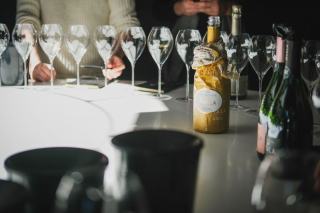
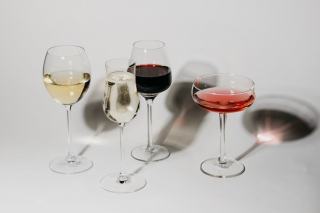
The grape varieties matter too. Chardonnay reserves keep their freshness for a long time and bring tension, which is why a blanc de blancs made from chardonnay alone can draw on very old reserve wines without losing its edge; pinot noir and meunier reserves bring body and fruit. At a tasting, the characteristics of a reserve-rich blanc or rosé cuvée show as a creamier texture and a flavor of brioche or dried fruit, while the sparkling freshness stays in the finish. A house style built on pinot noir will not use its reserve the same way as a house built on chardonnay grapes, which is another reason why the word reserve alone never tells the whole story.
Choosing a champagne through its reserve policy
If you want a wine that tastes the same every time you buy it, choose a large house with a long reserve policy: that is exactly what its reserve wines are for. If you prefer a champagne that changes with the year, look for a grower or a cuvée with a small share of reserve, or for a vintage bottle. If you want depth and complexity at a non-vintage price, look for producers who state a high proportion of reserve wines aged in oak or kept as a perpetual reserve.
In every case, the useful question to ask a wine shop is not whether a bottle is vintage, but how much time sits behind it. The reserve is where that time is stored, and it is often the part of the wine that took the longest to make.