A sugar cube, a few dashes of Angostura bitters and chilled brut champagne: the original champagne cocktail recipe has barely changed since the 1860s. The best champagne cocktails today, from the French 75 to the Mimosa, peach Bellini and Kir Royale, build on that one idea: gin, cognac, fruit or liqueur in the glass, champagne poured last.
Three rules behind every good glass. Pour a dry non-vintage brut or extra brut rather than a prestige bottle, since the sugar and the spirit will cover its finer notes. Keep every ingredient cold, glass included, so the wine keeps its mousse. Add the champagne last and slowly, down the side of the flute, and never shake it.
What is a champagne cocktail, exactly?
The phrase has two meanings. In the strict sense, the Champagne Cocktail is one precise drink: a sugar cube soaked in Angostura bitters, dropped into a champagne flute and topped with chilled champagne, sometimes with a small measure of cognac poured over the sugar before the wine goes in. The International Bartenders Association lists it among its official cocktails, with brandy or cognac as an optional addition. In the broad sense, a champagne cocktail is any mixed drink built on champagne, from the two-ingredient Mimosa to the gin and lemon French 75.
Both meanings share the same logic. Champagne brings acidity, carbonation and a dry, bready finish; the other ingredients add sweetness, bitterness, fruit or alcoholic strength. The result has to stay lighter than a spirit-forward cocktail, which is why the champagne usually makes up half to three quarters of the glass. Once the proportion of spirit or syrup climbs higher, the wine becomes a simple topper and its character disappears.
That balance also explains why so many classics have survived for a century or more. A cocktail with champagne can be made in under a minute, needs no shaker for most recipes and adapts to what is in the kitchen: orange juice for brunch, cassis from the cupboard, a splash of Grand Marnier after dinner. The drinks below are grouped from the simplest to the most elaborate, with measures that assume a standard 150 ml flute.
The classic champagne cocktail recipe, step by step
The historic version appears in Jerry Thomas's bar guide of 1862, one of the first cocktail books ever printed, and the method has stayed almost the same. It is the recipe to learn first, because it teaches the essential gesture of every champagne cocktail: build the flavour in the glass, then pour the wine gently over it.
Champagne cocktail ingredients
- 1 white sugar cube
- 2 to 3 dashes of Angostura bitters
- 10 to 15 ml of cognac (optional, but standard in most modern bars)
- About 120 ml of chilled brut champagne
- A strip of lemon or orange zest to garnish
Champagne cocktail directions
- Chill the champagne flute in the freezer for ten minutes, or fill it with ice water while you prepare the rest.
- Place the sugar cube on a bar spoon and soak it with the Angostura bitters until it turns reddish brown.
- Drop the cube into the empty, cold flute and add the cognac if you use it.
- Tilt the glass and slowly pour the champagne down its side, in two stages to keep the foam under control.
- Twist the zest over the surface to release its oils, then drop it in or hang it on the rim.
The sugar cube is not decoration. As it dissolves it releases a steady stream of fine bubbles, and the drink changes as you sip: drier and more bitter at first, softer and rounder at the bottom of the glass. A sugar syrup would sweeten the wine instantly and lose that slow evolution, which is why purists keep the cube.
Six easy champagne cocktails you can make in minutes
These drinks need two or three ingredients and no special equipment. They are the ones most guests recognise, and each one tolerates small variations without falling apart. The table gives the reference proportions; the paragraphs explain what makes each one work.
| Cocktail | Base under the champagne | Proportion | Glass |
|---|---|---|---|
| Kir Royale | Crème de cassis | 1 part cassis, 5 to 6 parts champagne | Flute |
| Mimosa | Fresh orange juice | 1 part juice, 1 part champagne | Flute |
| Buck's Fizz | Fresh orange juice | 1 part juice, 2 parts champagne | Flute |
| Bellini | White peach puree | 1 part puree, 2 to 3 parts wine | Flute or tumbler |
| Black Velvet | Stout | 1 part stout, 1 part champagne | Flute or pint glass |
| Champagne Spritz | Elderflower liqueur, soda | 1 part liqueur, 3 parts champagne, a splash of soda | Wine glass filled with ice |
Kir Royale
The Kir Royale is the champagne version of the Burgundy Kir, which mixes cassis with white wine. Pour 15 to 20 ml of crème de cassis into the base of the flute, then top with chilled champagne. A good cassis from Dijon or Nuits-Saint-Georges makes a real difference: cheaper liqueurs taste of syrup rather than blackcurrant. Swap the cassis for crème de mûre or crème de framboise and the same recipe gives a Kir Royal with blackberry or raspberry.
Mimosa and Buck's Fizz
The Mimosa is the brunch cocktail par excellence: equal parts fresh orange juice and champagne, served very cold. Buck's Fizz, created at the Buck's Club in London in 1921, came first and uses twice as much champagne as juice, so it tastes more of wine. For both, squeeze the oranges yourself and strain the pulp, pour the champagne first and the juice second, and stir once with a bar spoon, gently, so the mousse does not collapse.
Bellini
Giuseppe Cipriani created the Bellini at Harry's Bar in Venice in 1948, with white peach puree and Prosecco. Made with champagne, it is drier and more precise. Blend ripe white peaches, press them through a sieve, add a few drops of lemon juice to keep the colour, and chill the puree before mixing. Pour the peach puree first, then the sparkling wine, and stir gently.
Black Velvet and Champagne Spritz
The Black Velvet was reportedly created in 1861 at Brooks's Club in London to mourn Prince Albert: stout and champagne in equal parts, poured slowly one over the other. It sounds odd and works surprisingly well, the roasted notes of the beer meeting the acidity of the wine. The Champagne Spritz is its summery opposite: fill a large wine glass with ice, add elderflower liqueur, top with champagne and a splash of soda, then garnish with cucumber or lemon.
Which champagne should you use in a cocktail?
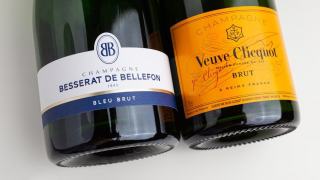
A non-vintage brut is the default choice, and there is little point in going higher. The complexity of a vintage or a prestige cuvée comes from ageing on the lees, and it is exactly what sugar, fruit juice and bitters mask first. On the other hand, a cheap, flabby wine will make a flat, sweet cocktail: acidity is the backbone of the drink. The style of the base changes the result more than the reputation of the house, as the second table shows.
| Style of champagne | Best suited to | Why |
|---|---|---|
| Non-vintage brut | Almost every recipe | Balanced acidity, neutral enough to carry fruit or spirits |
| Extra brut or brut nature | Kir Royale, sweet liqueurs, Bellini | Very low dosage offsets the sugar of the other ingredients |
| Blanc de blancs | French 75, citrus drinks | Chardonnay freshness underlines lemon and gin |
| Rosé | Red fruit cocktails, Aperol or berry mixes | Pinot noir fruit and colour add depth |
| Demi-sec | Rarely; dessert punch at most | Already sweet, it turns most mixes cloying |
The sugar level printed on the label is the most useful clue, and our guide to what the dosage tells you about sweetness explains each category. For a party where cocktails will take most of the bottles, a well-made non-vintage brut champagne from a grower or a cooperative gives the right acidity without the price of a famous label. Other sparkling wine is a legitimate substitute: a crémant from Burgundy or Alsace, a cava or a dry Prosecco. The drink will simply be less precise, with bigger bubbles and less of the brioche note that makes champagne cocktails recognisable.
Champagne cocktails with gin, cognac and vodka
Adding a spirit turns a light aperitif into a proper cocktail with more structure. These recipes need a cocktail shaker and ice for the spirit and citrus part; the champagne always goes in last, directly in the glass, never in the shaker.
French 75
Named after the French 75 mm field gun of the First World War, the French 75 appeared in Harry MacElhone's bar guide in the 1920s. Put 30 ml of gin, 15 ml of fresh lemon juice and 10 to 15 ml of simple syrup in a shaker with ice, shake hard for ten seconds, strain into a flute and top with about 90 ml of champagne. The gin lemon combination gives a sharp, dry, very refreshing drink. In New Orleans it is often made with cognac instead of gin, a version that is rounder and warmer.
Russian Spring Punch
Created in London by bartender Dick Bradsell in the 1980s, the Russian Spring Punch is a long drink: 25 ml of vodka, 15 ml of crème de cassis, 25 ml of lemon juice and 10 ml of simple syrup, shaken with ice, strained into a highball glass filled with ice and topped with champagne. It is fruity, tart and dangerously easy to drink, which explains its success in cocktail bars.
Mojito Royal and Seelbach
The Mojito Royal replaces the soda of a classic mojito with champagne: muddle mint leaves with lime juice and sugar, add white rum and crushed ice, then top with champagne rather than sparkling water. The Seelbach, named after a hotel in Louisville, mixes bourbon, triple sec and a generous dose of Angostura and Peychaud's bitters under the wine, for a drink that stays spirit-forward.
Grand Marnier Royale and the Black Swan
For an after-dinner glass, pour 15 to 20 ml of Grand Marnier into a flute and top with champagne: the orange and cognac notes of the liqueur echo the brioche of the wine. The Black Swan, one of the modern recipes that French bartenders like to serve, adds a dark liqueur such as crème de mûre with a few drops of lime juice, giving a deep violet colour and a tart finish. With any of these spirits, keep the measure small: beyond 30 ml per glass, the champagne becomes a mixer and loses its purpose.
Champagne Sour, Airmail and Sgroppino
Three more recipes cover the sour family. The Champagne Sour shakes 40 ml of bourbon, 20 ml of lemon juice, 15 ml of simple syrup and an egg white, then adds a short top of champagne for a silky, lively drink. The Airmail, a Cuban-inspired cousin of the French 75, uses aged rum, lime juice and honey syrup under the wine. The Venetian Sgroppino whisks lemon sorbet with a splash of vodka and sparkling wine into a frothy dessert cocktail, served in a coupe with a lemon zest.
Champagne punch for a crowd
A champagne punch is the practical answer for weddings, birthdays and large gatherings, because it can be prepared partly in advance. The base, prepared a few hours before and kept in the fridge, is simple: 150 ml of cognac, 100 ml of orange liqueur, 150 ml of fresh lemon juice, 100 ml of simple syrup and a few slices of orange and fresh berries. At the last minute, pour the base into a bowl over one large block of ice, which melts far more slowly than cubes and dilutes the drink less, then add two bottles of chilled champagne and stir once.
In Champagne itself, the regional version is the soupe champenoise: triple sec, cane sugar syrup and lemon juice topped with champagne, served in cups. Both follow the same rule as a single glass: the wine goes in last, just before serving, and the bowl is refilled in small batches rather than all at once so the bubbles stay lively. For the number of bottles to plan for a large event, see how to calculate quantities in our guide to choosing champagne for a wedding; count roughly six to seven glasses of punch per bottle of champagne once the base is added.
An apple cider punch works well in autumn: dry cider, a measure of calvados, a cinnamon stick and champagne, with thin apple slices in the bowl. For a lighter option with less alcohol, replace the spirits with peach or apricot puree and white grape juice, and keep the champagne as the only alcoholic component.
How to serve champagne cocktails well
Temperature matters more than anything else. The champagne should be served at around 6 to 8 °C, the other ingredients chilled too, and the glass cold. Warm juice or room temperature liqueur makes the wine foam over and lose its carbonation in seconds. For the details on bottle temperature, opening and glassware, read our advice on serving champagne at the right temperature.
Choosing the glass
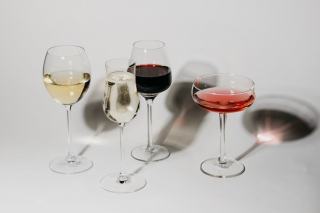
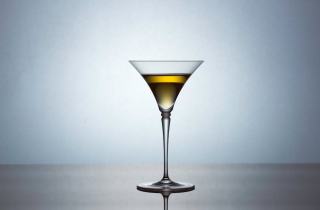
The champagne flute remains the standard for short champagne cocktails: its narrow shape keeps the bubbles longer and shows the colour of a Kir Royale or a Bellini. The coupe, elegant and period-appropriate for a French 75 or a Champagne Cocktail, lets the bubbles escape faster, so the drink must be enjoyed quickly. Long drinks such as the Spritz or the Russian Spring Punch go in a wine glass or a highball glass filled with ice.
Pouring without losing the bubbles
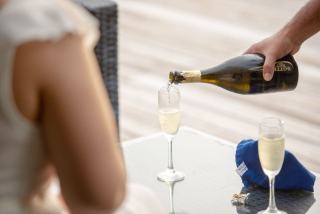
Pour the champagne slowly down the inside of the tilted glass, as you would pour a beer, and in two stages: a first pour to let the foam settle, then a second to fill. Never put champagne in a shaker, and never stir vigorously; a single turn of a bar spoon is enough to mix. Garnish last: a zest, a berry, a slice of peach, a sprig of mint.
Preparing in advance
Everything except the champagne can be prepared ahead: squeeze the juice, make the puree, measure the liqueurs into the glasses and store them in the fridge. Open the bottles only at the moment of serving, and top each glass to order. A champagne cocktail loses most of its sparkle within ten to fifteen minutes, which is why it is made glass by glass rather than in a jug, the punch excepted.
A short history of champagne cocktails
The first written trace of the Champagne Cocktail appears in Jerry Thomas's Bar-Tender's Guide of 1862, with sugar, bitters and a lemon twist. At the time, champagne was generally much sweeter than today; the brut style only became widespread at the end of the nineteenth century, driven by the British market. Adding bitters and sugar to a sweet wine made sense because it gave the drink structure.
The twentieth century saw the golden age of the champagne cocktail. The French 75 is linked to the Parisian bars of the 1920s, the Buck's Fizz to London clubs, the Bellini to Venice after the Second World War. The Kir Royale, derived from the Kir named after Canon Félix Kir, mayor of Dijon, became popular in the 1950s and 1960s. Each drink reflects its city: citrus and gin in Paris, fruit and elegance in Venice, simple indulgence in London. For the broader story of the wine itself, our page on the history of champagne goes back to the abbey cellars of the seventeenth century.
Modern bartending has given the classics a second life. Since the 2000s, bars have revived the Seelbach, invented the Russian Spring Punch and adapted the spritz to champagne. The idea remains the one found in the first recipe: a few carefully chosen ingredients, a cold glass, and champagne poured last.
Creative champagne cocktail ideas to mix at home
Once the classics are mastered, the same structure opens up endless unique champagne cocktails. A few directions that work reliably:
- Herbal: a syrup infused with rosemary, thyme or basil, a few drops of lemon, champagne. Fresh and aromatic, ideal as an aperitif.
- Spiced: ginger syrup, a dash of Angostura, a thin slice of fresh ginger, champagne. Warm and lively for winter.
- Floral: violet or rose liqueur in very small quantities, champagne, an edible petal. Delicate, but a few millilitres too many and it tastes of perfume.
- Bitter: Aperol or Campari with an orange zest and rosé champagne, a richer version of the spritz.
- Tropical: passion fruit puree, a touch of vanilla syrup and brut champagne, close to the Pornstar Martini served with a shot of wine on the side.
The rule to follow is always the same: one dominant flavour, one supporting note, and never more than a third of the glass for everything that is not champagne. Taste the base before adding the wine; if it is too sweet on its own, the cocktail will be too.
Frequently asked questions about champagne cocktails
What is in a classic champagne cocktail?
A sugar cube soaked in Angostura bitters, placed in a flute, topped with chilled brut champagne and finished with a lemon or orange twist. Many bartenders add 10 to 15 ml of cognac over the sugar before pouring the wine.
What is the best champagne for cocktails?
A dry non-vintage brut or extra brut. Its acidity balances the sugar of liqueurs and fruit, while a vintage or prestige cuvée would lose its complexity under the other ingredients.
Can you use Prosecco or other sparkling wine instead of champagne?
Yes. A crémant, a cava or a dry Prosecco all make good cocktails. The result will be fruitier, with bigger bubbles and less of the toasted, bready note that champagne brings.
Should you shake a champagne cocktail?
Never shake the champagne. Shake only the spirit, citrus and syrup with ice in a cocktail shaker, strain them into the glass, then slowly pour the champagne on top.
Can champagne cocktails be made in advance?
Only the base. Juices, purees and spirits can be measured and chilled hours ahead, but the champagne goes in at the last moment, because the bubbles fade within ten to fifteen minutes.