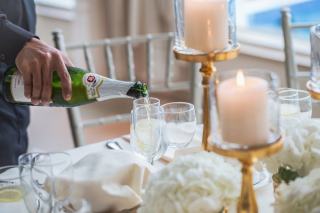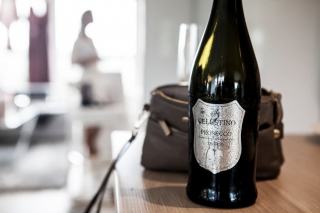
Good champagne tasting notes follow the wine in four steps: the mousse and color in the glass, each aroma on the nose, the flavor, alcohol and sweetness on the palate, then the finish. Whether you taste at home or on a cellar visit in France, the wine country of Reims and Épernay, the same notes let you read back every tasting experience before choosing the next champagne to taste.
A good tasting note answers three questions: which flavor profile does this champagne show, how well is the wine made, and would I taste it again on my next visit? Read your champagne tasting notes again before each wine visit.
In practice, champagne tasting notes name the grape varieties (Pinot Noir, Meunier, Chardonnay), the sweetness level from Extra Brut to Extra Dry, the brioche born of the secondary fermentation of the traditional method, and whether the wine is a vintage champagne or a non-vintage Brut champagne. Add a food pairing idea and your tasting experience becomes a guide for the next bottle.
What are champagne tasting notes, and why keep them?
Tasting notes are short written descriptions of a wine, taken while you taste it. For champagne, tasting notes matter more than for most still wine, because the bottles on a shelf look so alike. Two Brut labels from the same village in France can taste completely different once poured: one lean and chalky, the other round and toasty. Without notes, that difference fades within a week.
A note does not need to be poetic. The most useful champagne tasting notes are plain: "pale gold, fine persistent mousse, lemon and brioche, high acidity, low dosage, long saline finish." Read back a year later, that line tells you more than "lovely, festive." Professional tasters in the Champagne region write almost exactly like that, and their vocabulary is easy to borrow.
Notes also train the palate. Writing forces you to decide whether a wine is fruity or toasty, dry or off-dry, short or long. After twenty bottles you start to recognise a Blanc de Blancs by its tension, or a Pinot Noir heavy blend by its red fruit and weight. If you want to go deeper into the grapes themselves, our guide to what separates champagne from other sparkling wines explains the method and the terroir behind that difference.
Preparing the tasting: glass, temperature and order
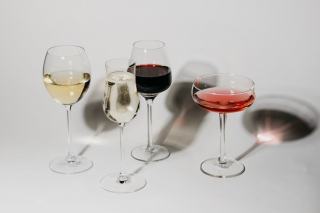
Before the first sip, set the conditions. A tulip glass or a white wine glass works better than a narrow flute: the wider bowl lets aromas gather, while the tapered rim concentrates them. Many houses in France now serve their own wines this way during a tasting visit.
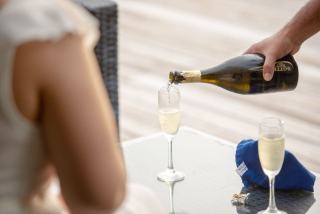
Serve the champagne at 8 to 10 °C for a young Brut and closer to 10 to 12 °C for a vintage champagne or a prestige cuvée. Too cold and the nose closes; too warm and the alcohol and the bubbles feel aggressive. Pour about a third of the glass so there is room to swirl gently.
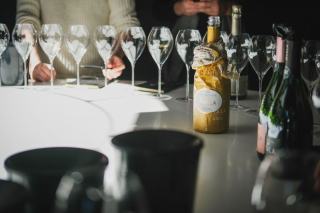
When several bottles are opened, taste from the lightest and driest to the richest and sweetest: Blanc de Blancs and Extra Brut first, then Brut blends, Blanc de Noirs, rosé, vintage wines, and finally Demi-Sec. A glass of still water and a plain cracker between wines keep the palate honest. Write the name, the producer, the vintage or "NV", the dosage printed on the label and the disgorgement date if it appears.
Appearance and mousse: what the eye can read
Hold the glass against a white surface. Note the colour first. Pale lemon with green glints usually points to a young wine made mostly from Chardonnay. Golden tones suggest Pinot Noir and Pinot Meunier in the blend, or bottle age. Deep gold to amber indicates an older wine; in a rosé, the shade runs from pale salmon to copper and ruby.
Then watch the bubbles. Fine, regular streams that keep rising for minutes reflect long ageing on the lees after the secondary fermentation in the bottle. Large bubbles that vanish quickly often come from a shorter ageing or a warm glass. The mousse on the surface, the thin ring of foam, should persist rather than collapse. Record it simply: fine or coarse, persistent or fleeting.
- Colour: pale lemon, straw, gold, amber; for rosé, salmon, copper, ruby.
- Bubbles: fine or coarse, steady or erratic.
- Mousse: creamy and lasting, or thin and short.
The nose: three families of aroma
Swirl lightly, then smell twice: a first quick sniff for intensity, a second longer one for detail. Champagne aromas fall into three families, and naming the family matters more than finding the perfect fruit.
- Primary aromas
- They come from the grapes. Chardonnay gives lemon, green apple, white flowers and a chalky, mineral edge. Pinot Noir brings red fruit, cherry and a certain weight. Meunier adds ripe orchard fruit and softness.
- Secondary aromas
- They come from the fermentation process and the time on lees: brioche, fresh bread, biscuit, cream, yeast. This autolytic character is what sets champagne apart from most sparkling wines made quickly in tank.
- Tertiary aromas
- They appear with bottle age: honey, toast, hazelnut, dried apricot, mushroom, sometimes coffee. A vintage champagne kept ten years in the cellar usually shows them clearly.
A young non-vintage wine leads with primary fruit and a touch of brioche. A mature cuvée shows the third family. If you smell wet cardboard or a musty cellar, the bottle may be corked; that is a fault, not a style, and worth writing down as such.
The palate: acidity, dosage, alcohol and texture
Take a small sip and let it cover the whole mouth. Four elements structure champagne tasting on the palate, and a good note gives each one a word.
Acidity and dosage
Acidity is the backbone. Champagne comes from one of the most northern wine regions of France, and high natural acidity is its signature. Dosage, the small addition of sugar after disgorgement, balances it. The label gives the category: Brut Nature (under 3 g/L), Extra Brut (0 to 6 g/L), Brut (under 12 g/L), Extra Dry (12 to 17 g/L), Sec (17 to 32 g/L), Demi-Sec (32 to 50 g/L) and Doux (over 50 g/L). In the note, say whether the sweetness level feels integrated or whether it sticks out. The full scale is explained in our page on how dosage shapes the sweetness of each bottle.
Alcohol and body
Most champagne sits at 12 to 12.5 % alcohol by volume. That is moderate for a wine, yet the alcohol still shows as warmth at the back of the palate. In a well made cuvée you barely notice the alcohol; if it burns, the wine may be served too warm or be out of balance. Body follows grape varieties: Blanc de Noirs feels broader, Blanc de Blancs finer. Carbon dioxide also speeds the passage of alcohol into the blood, one reason a glass of champagne feels quicker than a still wine.
Texture of the mousse
Describe how the bubbles feel: creamy, silky, fine, or sharp and foamy. Long ageing on lees gives a softer, more integrated mousse. This is often the clearest sign of quality you can taste.
The finish and the final judgement
After swallowing, count how long the flavor stays. A short finish of a few seconds suggests a simple wine; a quality champagne lingers for twenty to thirty seconds or more, often with a saline, chalky, toasty or citrus flavor. Write the length and the last flavor you perceive, and whether the aromatic expression matches what the nose promised.
Then conclude in one line: style, quality, drinking window, and whether you would buy it again. Some tasters give a score out of 20 or 100; a simple three-level scale (would not buy, would buy, would buy by the case) is often more honest for personal notes. Add a pairing idea while the taste is fresh. Our guide to matching each champagne style with food helps turn a tasting note into a menu.
Questions tasters frequently ask
How do you taste champagne like a sommelier?
Follow the same sequence every time: eye, nose, palate, finish, conclusion. Sommeliers do not have better noses by birth; they repeat the method and write it down. Tasting two champagnes side by side, for example a Brut and an Extra Brut from the same house, teaches faster than tasting one alone.
What flavors are in champagne?
The common flavors are citrus, green apple, pear and white peach, red berries in rosé and Pinot Noir blends, then brioche, biscuit and cream from lees ageing, and with time honey, toast and nuts. Minerality, a chalky or saline sensation, is typical of wines from the Côte des Blancs.
Does the alcohol level change between champagnes?
Only a little. Almost every bottle stays between 12 and 12.5 % alcohol by volume, so differences in warmth come more from dosage, serving temperature and ripeness of the vintage than from the figure printed on the label.
Should I note the disgorgement date?
Yes, when it is printed. The same non-vintage champagne tastes fresher a few months after disgorgement and more toasty after two or three years. Without the date, two notes on "the same" wine may seem to contradict each other.
Tasting during a cellar visit in France
A visit to the Champagne region is the fastest way to calibrate your palate. The country around Reims, Épernay and the Côte des Blancs is small: in one day you can visit a large champagne house, a cooperative and a grower. Each visit usually ends with a tasting of two or three wines, which is the perfect moment to practise your notes.
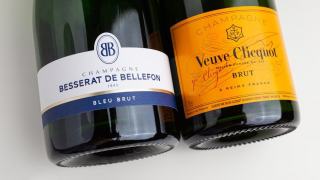
Houses such as Pol Roger, Louis Roederer, Moët & Chandon (maker of Dom Pérignon) or Veuve Clicquot receive visitors by appointment; book the visit ahead, as tours fill up in summer and at harvest time. Growers in villages like Avize, Cramant or Aÿ often receive visitors more informally and let you taste wines from single plots, which shows how much the soil changes the taste. Ask the people who pour whether you can read the technical sheet: blend, dosage, time on lees and disgorgement date.
A few habits make a visit more useful for your notes:
- Plan at most three visits a day; the palate tires and the alcohol adds up, even when you spit.
- Use the spittoon. Nobody in the country's cellars finds it rude, and your fourth tasting will be as clear as the first.
- Write the note during the visit, not in the car afterwards.
- Compare a house Brut with a grower Brut in the same visit day: the contrast teaches more than any book.
Visitors who love a floral, complex Blanc de Blancs often plan a second visit to the Côte des Blancs, while those who favour a richer style visit Aÿ and the Montagne de Reims; the country is small enough to explore both in a weekend. The Comité Champagne, the trade body of the appellation, publishes visitor information on its official website, and the local tourist offices in Reims and Épernay list the houses that open to the public. Driving between villages, remember that the legal blood alcohol limit in France is 0.5 g/L, lowered to 0.2 g/L for new drivers; one tasting visit too many is easy to reach.
Age, country of residence and alcohol laws
Champagne is an alcohol, and the rules around a tasting depend on the country. Before you enter most champagne house websites, a gate asks for your date of birth and your country of residence: the legal drinking age differs from one country to another, 18 in France and most of Europe, 21 in the United States, and the laws on alcohol advertising differ too. French law, for example, requires every message about wine to carry a reminder to drink with moderation.
The same logic applies on a visit. Houses in France will not serve a tasting to a minor, and some ask for identification. If you travel from another country, check the customs allowance for bringing bottles home: within the European Union, wine bought for personal use moves freely, while a country outside it often sets a limit per traveller. Rules exist to protect health and to frame the trade, so read them before booking a visit or ordering from a producer abroad.
Once these practical points are settled, the tasting experience itself is the same in every country: a glass, a bottle, and a notebook to discover how each flavor evolves.
A simple template for your notes
Consistency matters more than length. Copy this outline into a notebook or a phone file and fill it for every bottle; after a season, read the pages back and you will see your own taste take shape.
- Identity: producer, cuvée, NV or vintage, dosage, disgorgement date, where and when tasted.
- Eye: colour, bubbles, mousse.
- Nose: intensity, then primary, secondary, tertiary aromas.
- Palate: acidity, dosage, alcohol, body, texture of the mousse.
- Finish: length in seconds, last flavour.
- Verdict: style, quality, drinking window, buy again or not, food idea.
Kept this way, your champagne tasting notes become a personal guide: the wines you loved, the ones you would not repeat, and the reasons why. That is worth more than any critic's score, because it describes your palate and nobody else's.