For most of its history, champagne was a still, pale wine from a cold wine region of northeast France, and its bubbles were treated as a fault. The history of champagne is the story of how Benedictine monks, English glassworkers, Reims merchants and the great champagne houses turned that accident of fermentation into the sparkling wine produced by the traditional method we drink today.
In three sentences. The Champagne region made still wine for more than a thousand years before sparkling champagne existed. The bubbles came from a cold climate that stopped fermentation in winter, and they only became controllable in the 18th and 19th century thanks to stronger bottles, sugar measurement and riddling. The name was then protected by law, region by region, until the appellation of 1936.
Before the bubbles: a still wine of kings and abbeys
Vines were grown around Reims in Roman times, and the region's wine trade grew with its churches. Reims was the city where the kings of France were crowned, from Louis the Pious in 816 and then almost without interruption until Charles X in 1825, so the wine of the region was served at the most prestigious table in the country. Abbeys owned many of the best slopes: Benedictine communities at Hautvillers, Saint-Thierry and Saint-Nicaise worked vineyards, pressed grapes and sold wine to fund their houses.
This early champagne wine was not sparkling. It was a light, pale red or a greyish white made from pinot noir, and in the 17th century it competed directly with Burgundy at the French court. What the winemakers wanted was a clear, still wine that travelled well. What they often got, each spring, was a wine that fizzed in the barrel or in the bottle, which buyers considered a defect.
The reason is the northern climate. Champagne sits near the limit where grapes can ripen, and autumn in the region turns cold early. Yeast stops working when the cellar temperature falls, so fermentation often halted before the wine was fully dry. When the weather warmed up in spring, it woke, the fermentation restarted inside the closed cask or bottle, and the carbon dioxide gas it released had nowhere to go. French producers called it the saute-bouchon wine, and some called it the devil's wine because the glass would burst one after another, setting off chain reactions that could destroy a large part of a year's production.
Who invented champagne? The English, the monk and the myth
No single person invented champagne, and the popular answer, Dom Pérignon, is only part of the story. The first written description of deliberately making a wine sparkle came from England. In 1662 the physician Christopher Merret presented a paper to the Royal Society in London explaining that coopers and wine merchants added sugar and molasses to wines to make them "drink brisk and sparkling". English buyers imported still champagne in barrels and bottled it themselves, and the second fermentation happened in their cellars.
They could do it because English glass was stronger. After a decree of 1615 banned the use of wood in English glass furnaces, glassworks switched to coal, which burned hotter and produced thicker, darker bottles able to hold more pressure. French glass of the same period was blown in wood-fired furnaces and was far more fragile. The English taste for bubbles, combined with English glass, set the direction long before the French adopted it.
What Dom Pérignon really did at the Abbey of Hautvillers
Dom Pierre Pérignon (1638-1715) was a Benedictine monk who became cellarer of the Abbey of Hautvillers in 1668 and held the post for 47 years. His work was aimed at improving still wine, not creating bubbles; for a monk of his day, a wine that re-fermented was a problem to solve. His real contributions were practical and lasting:
- blending grapes from several vineyards to build a balanced, consistent wine, the principle behind every modern house cuvée;
- pressing black grapes quickly and gently to obtain a white juice, the basis of blanc de noirs;
- pruning hard and harvesting in the cool of the morning to protect quality;
- raising the reputation, and the price, of Hautvillers wine across France.
The famous line "Come quickly, I am tasting the stars" is a later invention, found in advertising from the late 19th century. The abbey's legend was polished by his successor Dom Grossard and by the firms that followed. Moët & Chandon later dedicated its prestige cuvée to him, with a first vintage of 1921 released in 1936, which fixed the monk in the public mind as the father of champagne.
The 18th century: bottles, a royal decree and the first houses
Sparkling champagne became fashionable in Paris during the Regency that followed the death of Louis XIV in 1715. Aristocratic suppers at the court of the Duke of Orléans made the lively wine a symbol of wit and pleasure, and it spread to the courts of Europe.
A key date is 25 May 1728. A decree from Louis XV authorised the transport of champagne in bottles, in baskets of 50 or 100, where wine had previously had to travel in barrels. Since the bubbles formed in the bottle, this decision made a trade in sparkling wine possible. The first champagne house was founded the following year: Ruinart, established in Reims in 1729 by Nicolas Ruinart, a cloth merchant whose uncle, Dom Thierry Ruinart, was a Benedictine monk. Other names that still exist followed quickly, among them Taittinger's predecessor Forest-Fourneaux (1734), Moët (1743), Lanson (1760) and Veuve Clicquot (1772).
The wine itself was still unpredictable. Losses from bursting glass commonly reached a fifth or even a third of the stock in a warm spring, and workers wore iron masks. Most sparkling champagne of this period was also cloudy, because the dead lees stayed inside, and very sweet, far from the brut champagne sold today.
The 19th century: science, a widow and the great champagne houses
The 19th century turned champagne from an artisanal gamble into an industry. Three technical advances made the difference, and each one still defines the traditional method of making champagne step by step. French writers came to call it the méthode champenoise, a term the law now reserves for the region.
The pupitre and the clear wine of Madame Clicquot
Barbe-Nicole Ponsardin, widowed in 1805 at 27, took over her husband's business and became the Veuve Clicquot, the widow Clicquot. Her cellar team, led by Antoine de Müller, perfected around 1816 the riddling table, or pupitre: a board pierced with angled holes in which bottles are turned and tipped a little each day, so that the deposit slides down into the neck. The deposit could then be removed and the wine became brilliant and clear. Madame Clicquot is also credited with one of the first vintage champagne releases, from the 1810 harvest, and with the first rosé champagne made by blending red and white wine, in 1818.
Measuring the fizz and the end of exploding bottles
In 1836 a pharmacist from Châlons, Jean-Baptiste François, published a method to measure the sugar in wine and calculate how much to add for the second fermentation. For the first time, winemakers could predict the pressure in the bottle, today around 5 to 6 bars, and reduce losses dramatically. Better glass and the wire muzzle, or muselet, did the rest. In the 1880s disgorgement was improved by freezing the neck of the bottle in a cold brine, so the plug of sediment came out as a small block of ice: a process still used today.
From sweet to brut
Nineteenth-century champagne was generally sweet, often with well over 100 grams of sugar per litre for the Russian market. The English, again, pushed toward drier styles. In 1874 Louise Pommery launched a champagne with very little dosage for British buyers, often cited as the first brut. Drier champagne slowly won, and brut is now by far the most common style.
These were also the decades of the great champagne houses. Bollinger (1829), Krug (1843), Pommery, Pol Roger (1849), Louis Roederer and Laurent-Perrier grew into international brands, and their chalk cellars, the crayères of Reims and the kilometres of galleries in Épernay, became part of the landscape. You can compare how their house styles differ today in our overview of which house of champagne suits your taste. Merchants sold to the courts of Russia, Britain and Germany, advertised heavily and turned champagne into the drink of celebration, launches and victory.
Key dates in champagne history
Here are the milestones explained in order, from the vineyards of the Middle Ages to the modern champagne industry.
| Date | Event |
|---|---|
| 816 | Louis the Pious crowned in Reims; the region's wine joins the coronation |
| 1662 | Christopher Merret describes adding sugar to make wine sparkling (London) |
| 1668 | Dom Pérignon becomes cellarer of the Abbey of Hautvillers |
| 1728 | A decree allows champagne to be shipped in bottles |
| 1729 | Ruinart, the first champagne house, founded in Reims |
| c. 1816 | Riddling table developed at Veuve Clicquot |
| 1836 | Jean-Baptiste François measures sugar to control the fizz |
| 1874 | Pommery launches a dry champagne for the English market |
| 1890 | Phylloxera reaches the Champagne vineyards |
| 1911 | Champagne riots between vine growers of the Marne and the Aube |
| 1936 | Champagne becomes an appellation d'origine contrôlée |
| 1941 | Creation of the interprofessional body, today the Comité Champagne |
| 2015 | Champagne hillsides, houses and cellars listed as UNESCO World Heritage |
Phylloxera, riots and the fight to protect champagne
The end of the 19th century brought a crisis. The phylloxera aphid, which had already ravaged southern French vineyards, was found in Champagne in 1890 and destroyed a large share of the vines over the following decades. Vineyard owners replanted on resistant American rootstocks, and the replanting favoured the three grape varieties that dominate today: pinot noir, pinot meunier and chardonnay. Older varieties such as pinot blanc, arbane and petit meslier survived only in small plots. The champagne grape varieties behind every blend are still, essentially, the result of that replanting.
At the same time, vignerons accused some merchants of buying cheap wine from other regions and selling it as champagne. Tension over where the champagne region stopped exploded in 1911: vine growers of the Marne rioted against fraud, then those of the Aube rioted in turn when they were excluded from the area. Troops were sent in. The quarrel was settled step by step, and the modern boundary was fixed by the law of 1927, before the appellation of 1936 set rules on yields, pressing and ageing.
Protecting the term champagne abroad took just as long. The Treaty of Versailles in 1919 included a clause obliging Germany to respect French regional wine names, and the protection was later extended through bilateral agreements and, today, European Union law. Using the name for any sparkling wine produced outside the delimited area is now forbidden in the EU and in most wine-trading countries, which is why other wines use terms like crémant, cava or simply sparkling wine. The difference between champagne and sparkling wine is therefore first a matter of geography and law, then of method.
Two world wars underground
The First World War put the champagne region on the front line. Reims was shelled for almost four years and much of its cathedral burned in September 1914. The city's inhabitants lived for long periods underground in the chalk cellars, where schools and chapels were set up underground, and the 1914 harvest was picked partly by children and women under artillery fire. It is remembered as an excellent vintage.
During the Second World War, German authorities requisitioned champagne for the army, with a weinführer appointed in Reims to manage shipments. Producers hid the best cuvées behind false walls. In 1941 the champagne trade created a joint body to organise production under occupation; it became the interprofessional committee that still sets the rules for the whole trade, and that works to protect the appellation worldwide.
How champagne has evolved over time since 1945
After the war, champagne production grew with prosperity. Sales rose from a few tens of millions of bottles a year to a peak above 300 million at the end of the 2000s; the Comité Champagne reported about 271 million bottles shipped in 2024. The area under vine grew to about 34,000 hectares, spread across some 320 villages in five départements, mainly the Marne, the Aube and the Aisne.
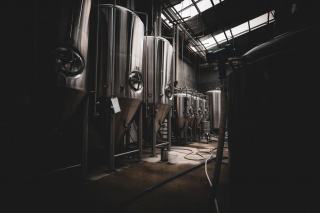
The structure of the trade also changed. Growers who once sold all their grapes to the merchants began making and bottling their own wine, labelled RM for récoltant-manipulant. Cooperatives grew, and the big brands were grouped into luxury and drinks companies. Techniques evolved: stainless steel tanks, automatic machines called gyropalettes, and more precise dosage. The underlying process, a second fermentation in the bottle followed by long ageing in contact with the yeast lees, stayed the same, because the appellation rules require it: at least 15 months on the lees for non-vintage champagne and three years for vintage champagne.
Recent decades have brought new questions. The warming climate has advanced the harvest by around two to three weeks compared with the 1980s, making grapes riper and wines rounder, and producers now work on sustainability programmes, reducing herbicides and lighter bottles. The region's history became heritage in 2015, when UNESCO listed the champagne hillsides, houses and cellars, from the vineyards of Hautvillers to the avenue de Champagne in Épernay and the cellars of Reims.
Why the story still matters in your glass
Knowing the history of champagne changes the way you taste it. The blend in a non-vintage champagne is Dom Pérignon's principle of assembling vineyards to keep a house style constant from one year to the next. The clarity of the wine comes from riddling, the dryness of a brut from the English market, and the word on the label from more than a century of legal fights. Even the shape and weight of the bottle carry the memory of the time when glass that could not resist the gas would explode.
The champagne you drink today is the product of a cold climate, of monks and vine growers who worked the region for a thousand years, of scientists who tamed carbon dioxide, and of houses and small makers who turned a local wine into a global symbol. Few drinks in the world carry so much history in a single glass.
Frequently asked questions about champagne history
Who is called the father of champagne?
Dom Pierre Pérignon, the Benedictine monk who was cellarer at the Abbey of Hautvillers from 1668 to 1715, is traditionally called the father of champagne. He did not invent the bubbles, but his blending and pressing methods shaped the wine.
When did champagne become sparkling?
Wines from the region fizzed naturally for centuries, but deliberate sparkling champagne appeared in the second half of the 17th century, first in England, then in France, where it became fashionable at the Regency court after 1715.
What is the oldest champagne house?
Ruinart, founded in Reims in 1729, is considered the oldest established champagne house still operating. Gosset claims an older origin, 1584, but as a producer of still wine.
Why did champagne bottles explode?
The second fermentation in the bottle releases carbon dioxide. Before the second fermentation could be calculated, winemakers could not control how much pressure built up, and the fragile glass of the time often burst, especially when the spring weather warmed the cellars.