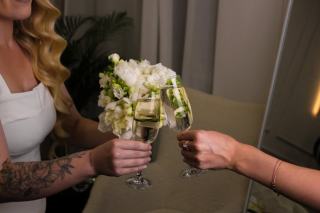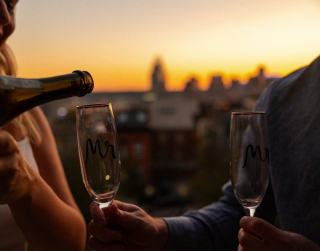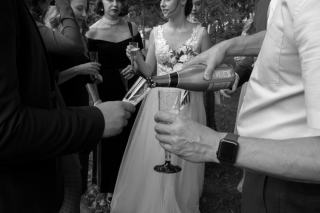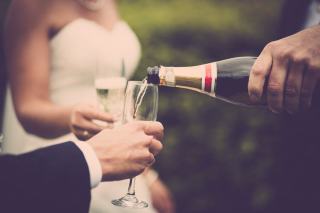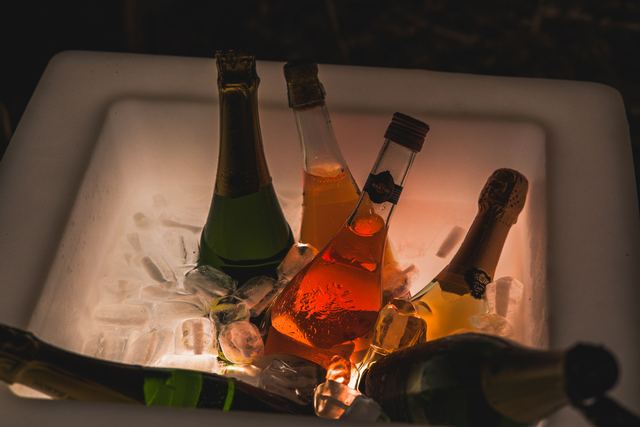
The recommended champagne for weddings is, in most cases, a balanced non-vintage brut from a reliable champagne house or grower: the ideal choice for the wedding toast, fresh with the aperitif, and consistent from the first bottle to the last. Choosing the right champagne for your wedding then comes down to three things: the style, the quantity and the moment. A rosé, a blanc de blancs or a vintage cuvée can add an elegant, personal touch to the celebration.
One style for the whole reception
- One style carries the whole reception: a non-vintage brut or brut reserve.
- One bottle of champagne pours five to six flutes; count one bottle per six to eight guests for the toast alone.
- For 100 guests with an aperitif and a toast, plan on 20 to 25 bottles, plus ten percent.
- Keep a special cuvée, a rosé or a blanc de blancs for the moment you want to remember.
Which type of champagne suits a wedding best?
A brut champagne is the safest choice for a wedding, because it pleases the widest range of guests. Brut means the wine carries little added sugar after the second fermentation, so it tastes fresh and dry without being austere. A house brut reserve is built from several years of reserve wines, which keeps the style identical from one bottle to the next: that consistency matters when a caterer opens sixty bottles in an hour. If you want to understand the family, our guide to what brut champagne tastes like and why it dominates explains the dosage scale.
Beyond brut, each type of champagne has a place in the wedding day:
- Extra brut: even drier, lovely with oysters and seafood, but some guests find it sharp on its own.
- Blanc de blancs champagne: pure chardonnay, light and citrus, ideal for a summer vin d'honneur in the garden.
- Blanc de noirs: from pinot noir and pinot meunier, rounder and fuller, good with white meat at the wedding dinner.
- Rosé champagne: pink colour in the glass and in the photographs, a natural match with red fruit desserts.
- Vintage champagne: a single harvest, more depth, best kept for the head table or the toast itself.
The champagne style you choose should follow the menu and the season rather than a label. A grape variety blend of chardonnay, pinot noir and pinot meunier, the classic champagne house recipe, is the most versatile wine for a long reception.
Recommended champagne for weddings, house by house
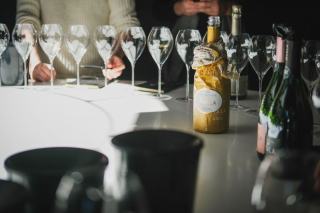
Couples often ask for a list of recommended champagne names they can trust. The houses below are widely available, produced in the Champagne region, and known for a steady non-vintage cuvée. These are suggestions, not a ranking: tasting two or three before you order is the only real test.
- Taittinger Brut Réserve: a high share of chardonnay, elegant and light, very popular for the champagne toast.
- Pol Roger Brut Réserve: firm, fine bubbles, a classic British wedding choice.
- Billecart-Salmon Brut Réserve: delicate and precise, with a well-known brut rosé if you want a second colour.
- Laurent-Perrier La Cuvée: fresh and chardonnay-led; the house rosé is one of the most famous in the region.
- Veuve Clicquot Yellow Label: pinot noir driven, generous, instantly recognisable on the table.
- Moët & Chandon Brut Impérial: the most popular champagne brand worldwide, easy to source in quantity.
- Deutz Brut Classic: refined and fresh, a house from Aÿ whose signature style is often praised for its elegance at an affordable level; the Deutz millésime is a lovely option for the toast.
Grower champagne is the other route. A small producer from a premier cru or grand cru village often offers remarkable value, and the story of a family estate adds something personal to the wedding reception. Prestige bottles such as Dom Pérignon or Armand de Brignac make sense for a handful of glasses at the head table, rarely for a hundred guests. Bought in small numbers and stored professionally, the same prestige cuvées can also become a long-term champagne investment.
How many bottles of champagne do you need?
Count five to six flutes per 75 cl bottle of champagne, then decide when you will serve champagne. For the toast only, one bottle serves six to eight guests. If champagne also carries the aperitif hour, allow three to four glasses per person; if it continues through the wedding dinner, add one to two glasses more. For magnums and larger formats, see how many glasses each champagne bottle size pours.
| Guests | Toast only | Toast and aperitif | Toast, aperitif and dinner |
|---|---|---|---|
| 50 | 7 to 9 bottles | 10 to 13 bottles | 20 to 25 bottles |
| 100 | 13 to 17 bottles | 20 to 25 bottles | 40 to 50 bottles |
| 150 | 19 to 25 bottles | 30 to 38 bottles | 60 to 75 bottles |
Add ten percent to whatever the table gives. Running dry during the wedding toast is hard to recover from, while leftover bottles keep well. Many wine merchants accept the return of unopened cases, which removes most of the risk.
Choosing champagne according to the wedding style
A formal evening wedding in a château calls for a structured wine: a brut reserve with some age, or a vintage brut for the toast. A relaxed garden wedding in June is the moment for a light blanc de blancs, served very cold under the trees. An autumn wedding with a rich menu welcomes a blanc de noirs, whose pinot noir body stands up to poultry and mushrooms.
The number of guests matters too. For a small wedding of thirty people, you can afford a special cuvée from a single grower and share the story behind it. For 200 guests, availability wins: choose a champagne you can buy in quantity from one batch, so every glass tastes the same.
Think of the setting as well. An outdoor reception in the heat needs ice buckets and shade; a winter ceremony pairs well with a slightly richer, rounder wine. The champagne should match the moment rather than impress on paper.
Champagne and food at the wedding dinner
Champagne works through the whole meal if you follow the dishes. An extra brut or blanc de blancs flatters oysters, smoked salmon and canapés. A brut classic or blanc de noirs accompanies white meat, veal and creamy sauces. A rosé champagne suits duck, lamb or a red fruit dessert. Red wine and white wine can still appear at the table; champagne does not have to replace them.
The wedding cake is the trap. A very sweet cake makes a dry champagne taste sour and thin. Either serve a demi-sec with the cake, or choose a less sugary dessert such as a fruit tart or a light pastry. Our page on pairing champagne with each course of a meal goes into more detail.
Serving champagne on the wedding day
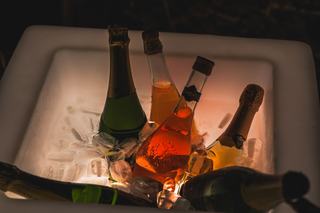
Serve the champagne at 8 to 10 °C: colder hides the aromas, warmer turns the bubbles aggressive. Chill bottles in ice water for about twenty minutes rather than several days in a fridge. Tulip glasses show the wine better than coupes and keep the sparkling mousse longer than flat saucers.
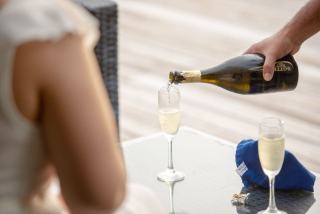
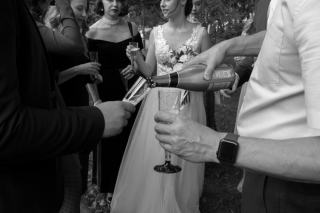
Brief the staff. Bottles should be opened with a quiet sigh, not a pop, and flutes filled one third at a time. Time the toast: glasses poured more than ten minutes early go flat before the speeches end. For temperature and glass choices in depth, see how to serve champagne at the right temperature.
A personal touch: the bottle only the two of you chose
This angle is often forgotten. Beyond the reception wine, many couples keep a few bottles of a vintage champagne from their wedding year, to open on anniversaries. A vintage cuvée from a good champagne house can age ten years or more in a cool, dark place, and opening it on your tenth anniversary is a moment of its own. Some couples also give a single bottle to parents or witnesses as a thank-you. Choose a year and a cuvée you tasted together: it matters more than the label.
Budget: where the price of wedding champagne really goes
The total cost of wedding champagne depends less on the label than on the quantity and the service. A house non-vintage brut sits in the middle of the price range; grower champagne is often the best value; prestige cuvées belong to the top of the budget. Rather than one expensive wine for everybody, most couples get a better result by splitting: an affordable, well-made brut for the vin d'honneur, and a more refined signature bottle for the toast.
Several other factors move the price. Buying by the case from one wine merchant usually earns a discount; ordering online makes comparison easy but check the delivery conditions in summer, since heat damages the wine. Some venues charge a corkage fee per bottle you bring yourself, which can change the choice between buying from the venue and buying from a merchant. Ask for the service to be included: staff who chill, open and pour correctly are worth as much as the bottle. For a sense of which bottles deliver quality without the premium, our selection of good champagne that does not stretch the budget is a useful starting point.
Tips for choosing champagne for your wedding
- Taste before you buy: order one bottle of each option and try them with a friend, with food, at the right temperature.
- Keep it simple: one reception champagne and, at most, one special bottle for the toast. Three styles complicate the service.
- Think about the photographs: a rosé in the glass is romantic and fun on camera; a magnum at the head table makes a strong image.
- Plan the alcohol-free option: guests who do not drink alcohol deserve a sparkling alternative in the same flute for the toast.
- Protect the freshness: store the bottles lying down, away from light, and do not leave them in a hot car or a sunny marquee.
These ideas matter more than any single brand. The best wedding champagne is the one served cold, in the right glass, at the right moment, by people who know how to pour it.
Champagne vs sparkling wine at a wedding
Sparkling wine such as crémant, cava or prosecco costs less and can fill the aperitif, but guests notice the difference in the toast. Only wine produced in the Champagne region under its rules can carry the name champagne. A common compromise is a crémant for cocktails and a true champagne for the wedding toast, so the most photographed moment gets the real thing.
Wedding champagne: questions couples ask
What is the best champagne for a wedding toast?
A dry non-vintage brut or brut reserve from a recognised champagne house or a quality grower is the best champagne for a wedding toast: fresh, balanced and appreciated by most guests.
How many bottles of champagne for 100 guests?
Plan on 13 to 17 bottles for the toast only and 20 to 25 bottles for a toast and aperitif. Add ten percent as a safety margin.
Should we choose brut or demi-sec for the wedding?
Choose brut for the toast and the reception; keep a demi-sec only if you serve champagne with a sweet wedding cake.
When should we order the wedding champagne?
Order six to eight weeks before the wedding day, confirm the delivery date and the storage temperature, and ask whether unopened cases can be returned.